How Long Do Onions Last? (Whole, Cut, Garlic & Why Never Next to the Potatoes)
Onions and garlic are the two things almost every savoury recipe starts with, and the two things most kitchens treat with total indifference — chucked in a bowl on the counter, or left in the supermarket’s plastic net at the back of a warm cupboard next to the spuds. Which is a shame, because stored properly an onion is one of the longest-keeping fresh foods you can buy: months, not weeks. Here’s how long they actually last, whole and cut, and the one garlic rule that isn’t about quality at all.
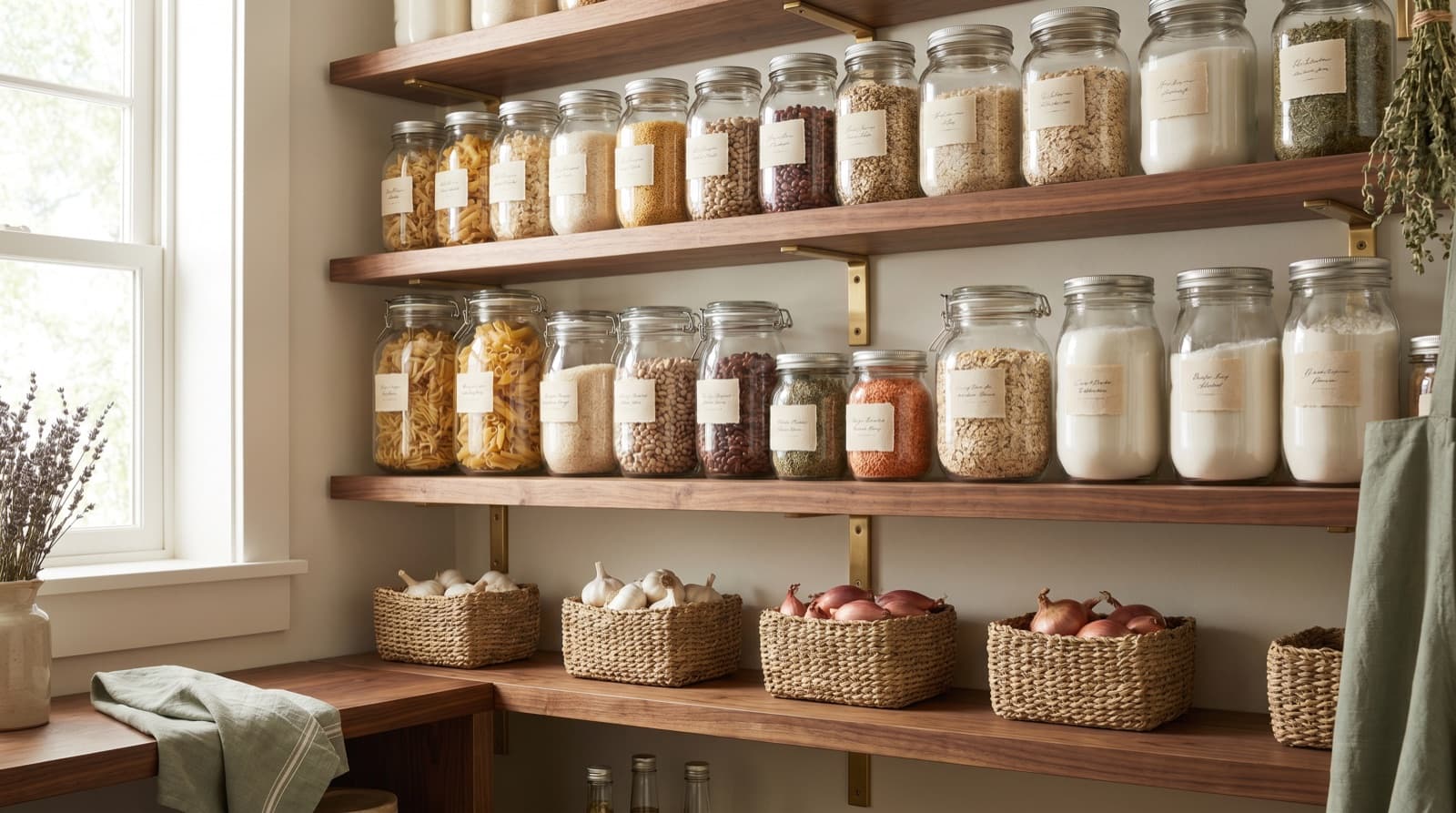
The frustrating thing about onion waste is how avoidable it is. Nobody bins an onion because they ate through the bag too slowly — an onion will happily wait months for you. They get binned because they were kept in the wrong place, went soft in six weeks instead of surviving six months, and then got thrown out along with the half of one that dried out in the fridge door. Both problems are storage problems, and both are trivially fixable.
The Short Answer: Months, If You Keep Them Cool and Airy
Whole, unpeeled onions keep 1–3 months in a normal cool cupboard. The National Onion Association is more generous about the ceiling: kept properly at 7–13°C (45–55°F), firm storage onions can hold for around 180 days in autumn and winter, and about 60 days in spring and summer when they’re less dormant and keener to sprout. In a warm kitchen with the heating on, be realistic and expect 3–4 weeks.
The variety matters more than people expect:
- Brown, yellow and red onions — the everyday storage onions. Firm, low-moisture, and the ones that genuinely last months.
- Sweet onions (Vidalia, Walla Walla, Cévennes) — much higher water content, much lower sulphur. They last 1–2 weeks, and they’re the one type that’s better off in the fridge, wrapped in kitchen paper. Buy them to use, not to store.
- Shallots — behave like small storage onions; about a month in the cupboard.
- Spring onions / scallions — a fresh herb in disguise, not a pantry item. 1–2 weeks in the fridge, and they last longest stood upright in a jar with a little water, like fresh herbs.
Cut Onions: 7–10 Days, and No, They’re Not Poisonous
Once you’ve cut into an onion the clock speeds up dramatically. Chopped or sliced onion keeps 7–10 days in a sealed container in the fridge at 4°C (40°F) or below. A halved onion with the skin still intact on one side does a bit better — roughly 10–14 days — simply because less flesh is exposed. Cooked onions, whether that’s a caramelised batch or the soffritto base of a sauce, follow the standard leftovers rule of 3–4 days.
Worth killing off one persistent piece of folklore: the idea that a cut onion left overnight “absorbs bacteria” and turns toxic. It doesn’t. An onion isn’t a bacterial sponge; it’s a moderately acidic vegetable that dries out, oxidises and eventually goes slimy like anything else. Wrap it, fridge it, use it within the week, and stop worrying about it.
Why the Fridge Is Wrong for Whole Onions
The instinct to refrigerate everything fails here. A fridge is cold, yes — but it’s also humid, and humidity is the thing an onion likes least. Damp gets under the papery skins, the outer layers go soft and slippery, mould takes hold, and the onion starts sprouting. A whole onion wants cold-ish and above all dry and airy.
Which means the packaging matters as much as the location. Onions should live in a mesh or net bag, a paper bag with holes punched in it, or an open basket. A sealed plastic bag is the single fastest way to ruin them — the Onion Association is blunt on the point, because no air circulation means trapped moisture means rot. If your onions came home in a plastic net, that’s fine; if they came in a sealed bag, take them out.
Never Store Onions With Potatoes
This is the oldest bit of kitchen advice about onions, and unlike most folklore it’s true in both directions. Potatoes give off moisture and ethylene gas; onions are damaged by moisture and triggered into sprouting by ethylene. Meanwhile onions give off their own gases that encourage potatoes to sprout. Put them in the same basket and you get a mutual-destruction pact: both go off faster than either would alone.
Two separate ventilated containers, ideally not touching. It costs you nothing and it’s probably the highest-return storage change in the whole kitchen. If you want the full version of the potato side of this, we wrote how long potatoes last last week. The same right-food-right-place instinct is what organising your fridge by zone is built on.
Garlic: Three to Six Months, Then the Clock Starts
Garlic is even better than onions at waiting. A whole, unbroken bulb keeps 3–6 months in the same cool, dark, ventilated conditions — genuinely one of the longest-lasting fresh things you can own, which is why it earns a permanent slot on any pantry staples list.
But breaking the bulb starts a countdown, because each clove has lost the protection of the whole head:
- Whole unbroken bulb — 3–6 months, cool and dark.
- Individual unpeeled cloves — about 3 weeks.
- Peeled cloves — about a week, sealed in the fridge.
- Chopped or crushed garlic — use within a day or two. It doesn’t become unsafe, it just goes flat and slightly harsh.
If a clove pushes out a green shoot, it’s entirely safe to eat — unlike a sprouting potato, there’s no toxin question here. The shoot is just faintly bitter, so pull it out if you’re being fussy. Soft, spongy or brown-spotted cloves, on the other hand, are done.
The One Real Safety Rule: Garlic in Oil
Almost everything above is a quality question. This bit isn’t. Raw garlic sitting in oil creates a low-acid, low-oxygen environment, which is exactly the condition Clostridium botulinum needs to grow and produce botulinum toxin. There have been documented botulism outbreaks traced to homemade garlic-in-oil left at room temperature, and it’s the reason the CDC’s botulism prevention guidance says to refrigerate homemade garlic- or herb-infused oils and throw away any you haven’t used within four days.
Shop-bought jars are a different matter: since 1991 the FDA has required commercial garlic-in-oil products to be acidified, which is what makes them shelf-stable. And critically, you cannot see, smell or taste botulinum toxin, so there’s no sniff test available. Keep homemade garlic oil in the fridge and use it within days — or better, freeze crushed garlic in a little oil in an ice-cube tray, which sidesteps the problem entirely and gives you portioned garlic on demand.
How to Tell When One Has Actually Gone
Onions don’t carry a meaningful date on them, so this is a judge-it-yourself food. Use your hands and your nose.
Bin it if: it’s soft or squashy under gentle pressure; it’s weeping liquid or the bottom of the bag is wet; there are mushy brown patches in the flesh once you peel it; there’s fuzzy mould on the flesh itself; or it smells sour, fermented or genuinely off rather than sharp and clean.
Don’t bin it if: the outer skins are scruffy, dusty or flecked with black — that usually comes away with the skin, and the onion underneath is fine. A small green shoot from the top is harmless too; the onion is just waking up, so move it to the front of the queue. Peel off the tired layers and carry on.
Freezing: The Underrated Escape Hatch
If you can see you’re not going to get through the bag, freeze it rather than watch it turn. Chopped raw onion freezes for 6–8 months with no blanching required — spread it on a tray to freeze loose, then bag it so you can grab a handful at a time. It thaws soft rather than crisp, so it’s useless raw in a salad, but for anything you’d fry, stew, curry or roast it’s indistinguishable, and it goes into a hot pan straight from frozen.
Caramelised onions freeze even better — make a big batch, portion into an ice-cube tray, and you’ve got the base of a French onion soup or a tart on tap. Garlic freezes fine as whole peeled cloves or as crushed-garlic-in-oil cubes. None of this takes more than ten minutes, and it turns a bag about to go over into three months of ready-prepped mise en place.
The Real Fix Is Remembering They’re There
Onions and garlic don’t rot because they’re fragile. They rot because they’re boring — the ingredient you assume you have, never check, and rediscover as a soft one at the bottom of the bag three months later. Storage fixes half of it: cool, dark, dry, ventilated, not next to the potatoes. The other half is knowing what you’ve got and when it came in.
That’s the half Pantree handles. It tracks what’s in your pantry and fridge, nudges you before things age out, and turns what you already have into something to cook tonight — so the last three onions become a soup rather than compost.
For the bigger picture, see how to stop wasting food and our full shelf-life reference for 30+ foods. For more of the series: potatoes, leafy greens, condiments, and canned food.
The Point
An onion is one of the best-value things in your kitchen precisely because it waits: months in a cool, dark, airy cupboard, and half a year for a good storage onion in the right conditions. Keep them in mesh or paper, out of the fridge, and nowhere near the potatoes. Cut ones get seven to ten days in a sealed box. Garlic bulbs hold for three to six months. And the only rule here that’s about safety rather than taste — homemade garlic in oil, fridge it, four days — is worth remembering properly, because that one you can’t smell coming.
Frequently Asked Questions
How long do onions last?
Whole, unpeeled onions keep roughly 1–3 months in a cool, dark, dry, well-ventilated spot. The National Onion Association puts the top end at around 180 days for firm storage onions kept properly in autumn and winter, and about 60 days in spring and summer, when they're less dormant. In a warm kitchen expect closer to 3–4 weeks. Sweet onions — Vidalia, Walla Walla and the like — hold far more water and last only 1–2 weeks, so treat them as a fresh vegetable rather than a pantry staple. Spring onions and shallots are different again: spring onions keep 1–2 weeks in the fridge, shallots a month or so in the cupboard.
Should you store onions in the fridge?
Not whole ones. A fridge is cold but humid, and humidity is what turns a firm onion soft, mouldy and sprouting. Whole unpeeled onions belong in a cool, dark, airy cupboard in a mesh or paper bag — never a sealed plastic one, because trapped moisture kills them fast. The exceptions all involve onions that have already been opened up: once an onion is peeled, cut, sliced or chopped, the fridge is exactly where it should go, in a sealed container. Sweet onions are the other exception — their high water content means they're better off wrapped in kitchen paper in the fridge from the start.
How long does a cut onion last in the fridge?
Chopped or sliced onion keeps 7–10 days in a sealed container in the fridge at 4°C (40°F) or below. A halved onion with the skin still on one side does slightly better — around 10–14 days — because there's less cut surface exposed. Cooked onions, including caramelised onions and the base of a sauce or soffritto, follow the ordinary leftovers rule of 3–4 days. Don't bother with the old myth that a cut onion 'absorbs bacteria' and becomes poisonous overnight; it doesn't. It just dries out, oxidises and eventually goes slimy, which you'll see and smell long before it's a problem.
How long does garlic last?
A whole, unbroken garlic bulb keeps 3–6 months in a cool, dark, ventilated spot — longer than almost anything else in the kitchen. Once you break the bulb apart, the individual unpeeled cloves last about 3 weeks. Peeled cloves drop to roughly a week in a sealed container in the fridge, and chopped or crushed garlic really wants to be used within a day or two, because it loses its punch quickly. If garlic sprouts a green shoot, it's still perfectly safe to eat — just a bit more bitter, so pull the shoot out if it bothers you.
Is homemade garlic in oil safe to keep?
This is the one genuine safety issue in this whole article. Raw garlic sitting in oil is a low-acid, low-oxygen environment, which is precisely where Clostridium botulinum can grow and produce botulinum toxin — and there have been documented outbreaks from garlic-in-oil. The CDC's guidance is to refrigerate homemade oils infused with garlic or herbs and discard any you haven't used within four days. Shop-bought garlic-in-oil is different: since 1991 the FDA has required commercial products to be acidified, which is why a jar can sit on a shelf safely. You cannot see, smell or taste botulinum toxin, so don't try to judge it by eye — just keep homemade garlic oil cold and use it fast, or freeze it instead.
How can you tell if an onion has gone bad?
Go by feel and smell before you go by the calendar. Bin it if it's soft, squashy or seeping liquid; if there are visibly mushy brown patches under the skin; if it smells sour, fermented or unpleasantly strong rather than sharp and clean; or if there's fuzzy mould on the flesh. Two things that look bad but aren't: the dry, papery black-flecked dust sometimes found on the outer skins usually brushes off with the skin, and a small green shoot growing from the top is harmless — the onion is just waking up, so use it soon. A firm onion with a couple of scruffy outer layers is fine; peel them off and carry on.
Can you freeze onions and garlic?
Yes, and it's an underrated move. Chopped raw onion freezes for 6–8 months with no blanching needed — spread it on a tray to freeze loose, then bag it. It comes out soft rather than crisp, so it's no good raw in a salad, but it's ideal for anything you'd fry, stew or roast, and it goes straight into the pan from frozen. Caramelised onions freeze brilliantly in ice-cube portions. Garlic freezes well too: whole peeled cloves, or crushed garlic frozen in a tray with a little oil, which conveniently also solves the garlic-in-oil safety problem. If you've got a glut of onions about to turn, the freezer is the answer.
Stop finding the soft one at the bottom of the bag.
Pantree tracks what’s in your pantry and what to cook before it ages out. Free on the App Store.