How to Organize Your Fridge So Food Stops Rotting
Most of the food you bin didn’t go off because you bought too much. It went off because it landed in the wrong part of the fridge, or in a part you couldn’t see, and quietly aged out while you forgot it was there. A fridge isn’t one cold box — it’s a map of warm and cold zones, and using that map is the cheapest food-waste fix there is.
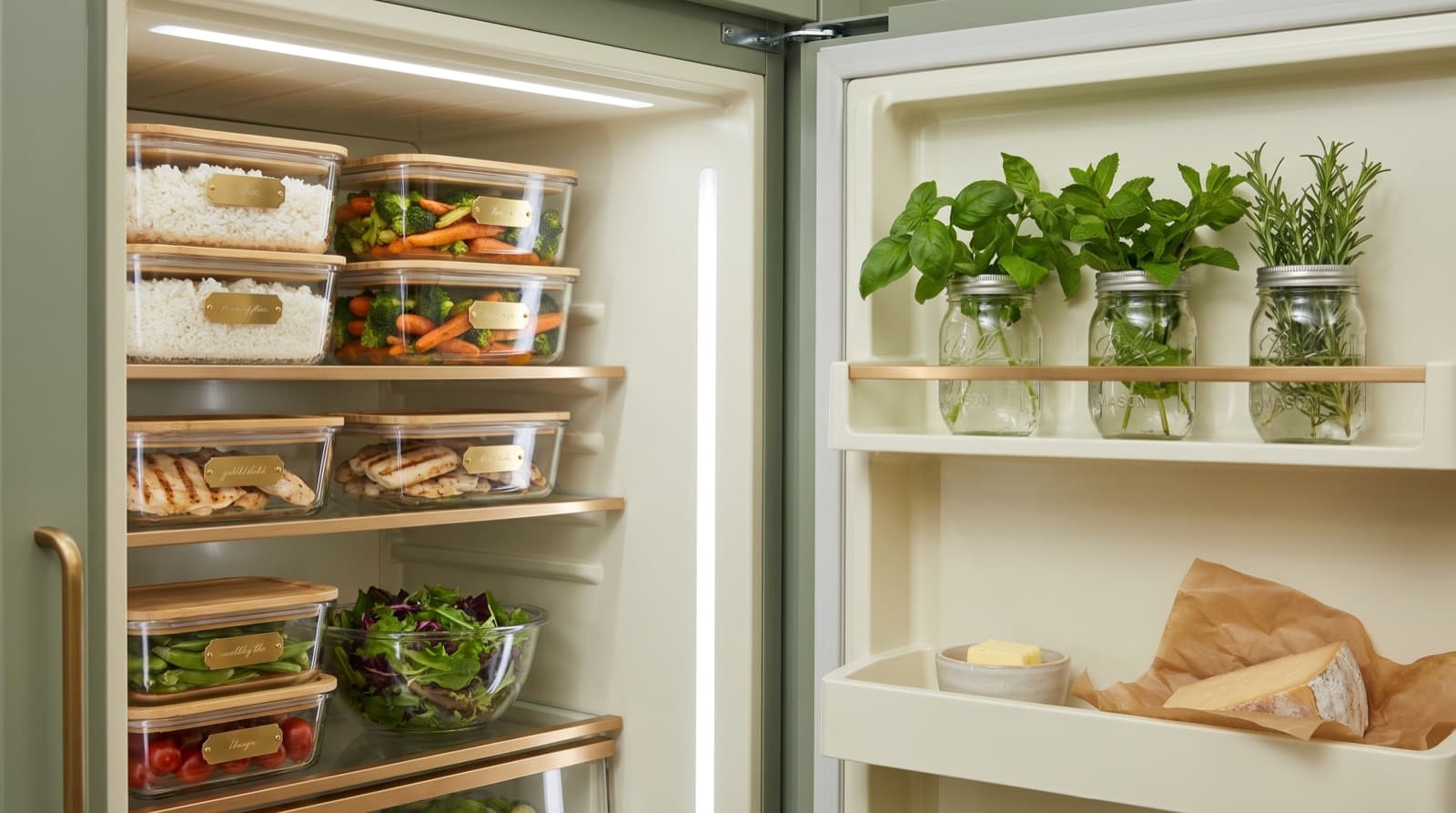
Food waste at home is enormous, and the fridge is where a lot of it happens. The UK throws away the equivalent of millions of tonnes of edible food a year, and WRAP consistently finds that most of it is food we bought, meant to eat, and simply didn’t get to in time. The good news is that a chunk of that is fixable without buying less or planning harder — just by storing what you already buy in the right place.
Your Fridge Is Not One Temperature
The single idea that changes everything: a fridge has zones. Cold air sinks, so the bottom is colder than the top. The door swings into a warm kitchen dozens of times a day, so it’s the warmest and most unstable part by a wide margin. The back is colder and steadier than the front. Once you see the fridge as a temperature map rather than a set of identical shelves, where everything goes stops being random.
A quick reality check first: the Food Standards Agency recommends keeping your fridge at 0–5°C. A lot of home fridges quietly run warmer than that, which shortens the life of everything inside. A cheap fridge thermometer on a middle shelf for a day will tell you the truth, and it’s the first thing to fix — no amount of clever arranging helps if the whole box is running at 8°C.
Where Everything Actually Goes
Bottom shelf — raw meat and fish
The coldest shelf, and the one place raw meat and fish belong — both because it’s coldest and because storing them at the bottom stops raw juices dripping onto anything below them. Keep them sealed, on a plate or tray to catch leaks. This is a food-safety rule as much as a freshness one: cross-contamination from raw meat is exactly what you’re designing the layout to prevent.
Middle shelves — dairy, eggs, leftovers
Cold, steady and at eye level: the prime real estate. Milk, yoghurt, cheese and eggs all want a cold, constant temperature, so they go here (towards the back), not in the door. Cooked leftovers and anything you’ve opened live here too, ideally in clear containers so you can actually see them. Eggs stay in their box on a shelf — the box protects them and the shelf keeps them at a steady temperature the door never will.
Top shelf — ready-to-eat and drinks
Slightly warmer and the easiest to reach, so it suits ready-to-eat things that don’t need the coldest spot: cooked meats you’ll finish soon, drinks, anything you snack on. It’s also a sensible home for the “eat me first” box (more on that below), because it’s the shelf you see every time you open the door.
Crisper drawers — fruit and veg, split by humidity
The drawers aren’t just “the veg bit” — they’re humidity-controlled, and they work best used as a pair. Set one to high humidity (vent closed) for leafy greens, herbs and most vegetables, which go limp when they dry out. Set the other to low humidity (vent open) for fruit that gives off ethylene gas — apples, pears, stone fruit — so the gas escapes instead of ripening everything nearby too fast. Keeping the ethylene producers away from the ethylene-sensitive greens is a genuinely effective trick for stopping salad wilting days early.
The door — only the hardy stuff
The warmest, wobbliest zone, so reserve it for things that don’t care: condiments, ketchup, mustard, jams, pickles, and fizzy drinks. The cruel irony is that most fridges put a moulded milk shelf and an egg rack right in the door — the two places milk and eggs should least be. Ignore the moulding; use the door for jars.
The Habit That Beats Any Layout: An “Eat Me First” Zone
Here’s the uncomfortable truth: most food doesn’t rot because it expired. It rots because it disappeared. The yoghurt slid behind the leftovers, the half-bag of spinach collapsed out of sight, and you found them a week past saving. The back of the fridge isn’t worse for food — it’s just where food goes to be forgotten.
The fix is embarrassingly simple: keep one clearly visible spot — a tray, a box, or just the front-left of a shelf — as your “eat me first” zone. Anything you’ve opened, anything near its date, anything that needs using up, goes there at eye level. When you’re deciding what to cook, you look there first. It’s the fridge equivalent of shop-shelf rotation — oldest at the front — and it catches more would-be waste than any container system you can buy.
Don’t Pack It Solid
A freezer likes to be full; a fridge likes a little breathing room. A jammed-full fridge blocks cold air from circulating, leaving warm pockets where food spoils faster than the dial suggests — and, just as importantly, a fridge you can’t see into is a fridge where things rot unseen. Leave gaps for air to move, keep the most perishable things at the front and visible, and resist wedging in one more thing that hides everything behind it.
Make It Stick
A perfectly organised fridge still fails if you can’t remember what’s in it. The layout solves the temperature problem; it doesn’t solve the memory problem — the half-used cream you genuinely forgot you owned, the leftovers that needed eating on Tuesday. That’s the gap a bit of tracking fills.
It’s part of why we built Pantree. It keeps a running list of what’s in your kitchen and how long it’s been there, and nudges you towards what needs eating before it turns — your “eat me first” zone, but one that actually remembers. Pair it with a fridge that’s organised by zone and you’ve closed both halves of the problem: the food is stored to last, and you don’t forget it’s there.
For the bigger picture, see how to stop wasting food and our shelf-life reference for 30+ foods. For specific items, here’s how long milk, eggs, fresh herbs and berries really last — and what the dates on the packet actually mean.
The Point
You don’t need a fridge full of matching containers or a label-maker. You need to treat the fridge as the temperature map it actually is: meat at the cold bottom, dairy and eggs on steady middle shelves, veg split between humid and dry drawers, only jars in the warm door — and one visible shelf for whatever needs eating next. Get that right, keep it at 5°C or below, and stop packing it solid, and a surprising amount of the food you used to bin simply gets eaten instead.
Frequently Asked Questions
Where is the coldest part of the fridge?
In almost every modern fridge the coldest spot is the bottom shelf, just above the salad drawers, because cold air sinks and that's also where it's furthest from the warm air that rushes in every time you open the door. The warmest part, by some margin, is the door — it swings into a warm kitchen dozens of times a day, so the temperature there fluctuates constantly. The practical rule that follows: put the things that spoil dangerously (raw meat, fish, anything you're worried about) on that cold bottom shelf, and keep only robust, preserved items — condiments, jams, fizzy drinks — in the door.
What is the best place to store milk in the fridge?
Not the door, even though that's where most fridges put a milk-bottle-shaped shelf. The door is the warmest, most temperature-swingy part of the fridge, and milk is one of the most temperature-sensitive things you'll keep in there. Storing it in the door can knock days off how long it stays good. Keep milk on a middle or lower shelf, towards the back, where the temperature is coldest and steadiest. The same goes for eggs: in their box, on a shelf, not in the moulded egg holder in the door.
What temperature should my fridge be?
Aim for 0–5°C (32–41°F), and ideally below 4°C. A surprising number of home fridges run warmer than people think, which quietly shortens the life of everything inside — a fridge sitting at 7–8°C will spoil milk and meat noticeably faster than one at 3°C. A cheap fridge thermometer left on a middle shelf for a day tells you the truth, since the built-in dial is often vague and the real temperature varies shelf to shelf. If food is going off faster than its dates suggest, a too-warm fridge is the usual culprit.
Should fruit and vegetables go in the crisper drawers?
Yes, and the drawers are designed to be used in pairs with different humidity. Set one drawer to high humidity (vent closed) for leafy greens, herbs and most vegetables, which wilt when they lose moisture. Set the other to low humidity (vent open) for fruits that give off ethylene gas — apples, pears, stone fruit — so the gas escapes rather than ripening everything around it too fast. Keeping ethylene producers away from ethylene-sensitive veg is one of the simplest ways to stop your salad going limp days early.
Why does food rot at the back of the fridge?
Because you can't see it. The back of the fridge isn't actually worse for food — it's often colder and better — but it's where things go to be forgotten. Yoghurt slides behind the leftovers, a bag of spinach collapses out of sight, and you rediscover them a week past saving. The fix is organisational, not thermal: keep a single 'eat me first' zone at the front of a shelf for anything near its date, and don't let the fridge get so packed that you can't see what's at the back. Most fridge waste is forgotten food, not food that genuinely expired.
Does overpacking the fridge make food spoil faster?
It can, in two ways. A jammed-full fridge blocks the cold air from circulating, so some pockets sit warmer than the dial claims and food there spoils early. And a fridge you can't see into is a fridge where things get forgotten and rot unseen. A freezer likes to be full; a fridge likes a bit of breathing room. Leave gaps for air to move, keep the most perishable items visible, and resist the urge to wedge in one more thing in front of everything else.
An organised fridge you don’t forget about.
Pantree tracks what’s in your kitchen and what to use before it turns. Free on the App Store.