What to Cook With What You Have: A Smarter Way to Plan Meals
Stuck staring into the fridge at 9pm? Here’s a framework for figuring out what to cook with what you already have, plus 12 ingredient-pair patterns, a substitution cheat sheet, and a faster way than Googling “recipes with…”
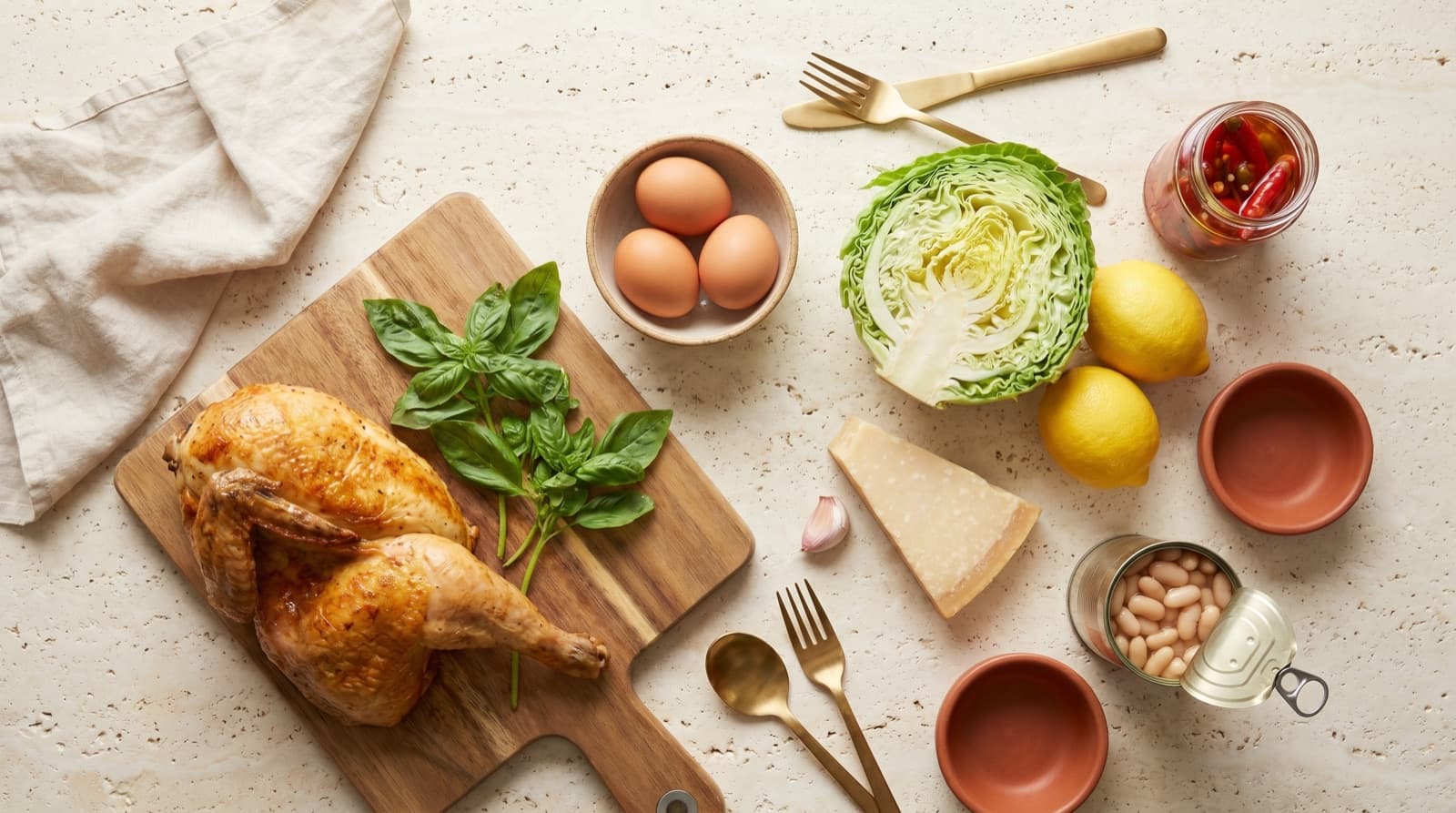
It’s 9pm. You’ve opened the fridge for the third time in twenty minutes. There’s a chicken thigh, half an onion, some wilting spinach, and a tub of yoghurt that’s probably still fine. The pantry has rice, pasta, tinned tomatoes, an unidentified jar of something, and far too many spices. You google “recipes with chicken and spinach,” scroll past 47 ads, and end up ordering Thai. Again.
You don’t actually need a recipe. You need a framework. The ability to look at a pile of random ingredients and think “okay, that’s a meal” is a skill, and like any skill, it’s mostly about learning a few patterns and applying them. This guide will give you that.
The Quick Answer (For When You’re Hungry Right Now)
What to cook with what you have: start with your protein, then add a carb (rice, pasta, bread, potato), one or two vegetables, and something acidic or salty for flavour (lemon, vinegar, soy sauce, cheese, herbs). Almost every weeknight meal in the world fits this template. If you have eggs, dairy, tinned tomatoes, onions, garlic, or pasta in the pantry, you can almost always build something, even when the fridge looks empty.
That sentence above is the whole article in 50 words. The rest is patterns, substitutions, and the practical question of how to do this without spending 20 minutes googling.
The Pantry Cook’s Framework (Four Slots, Infinite Meals)
Most savoury weeknight meals are built from four slots:
- A protein, chicken, beef, pork, fish, eggs, tofu, tinned tuna, beans, chickpeas, lentils. Yes, beans count.
- A carb base, rice, pasta, noodles, bread, tortillas, potatoes, couscous, quinoa.
- One or two vegetables, anything in the fridge that needs using, plus aromatics (onion, garlic, ginger).
- A flavour driver, fat (olive oil, butter), acid (lemon, vinegar, tomato), salt vehicle (soy sauce, fish sauce, cheese, miso), or heat (chilli, garlic). At least one. Ideally two.
That’s the formula. A stir-fry, a sheet-pan dinner, a pasta bake, a curry, a grain bowl, a frittata, they’re all the same framework with different cooking methods. Once you see the structure, the question stops being “what recipe can I make?” and starts being “which slot can I fill from what’s already here?”
12 Patterns Based On What’s In Your Pantry
Here are 12 ingredient pairs that show up in most kitchens, and what you can build from each. Every pattern below works in 30 minutes or less.
1. Eggs + tinned tomatoes
Make: Shakshuka. Sauté onion and garlic, add tinned tomatoes, simmer 10 minutes, crack eggs on top, cover until set. Add feta, herbs, or chilli if you have them. Bread for dipping if you have any.
2. Pasta + tinned tomatoes + garlic
Make: Quick tomato pasta. Sauté smashed garlic in olive oil, add tinned tomatoes, simmer while pasta cooks, toss together, finish with cheese and torn basil if you have it. With nothing else, it’s still dinner.
3. Chicken + rice
Make: Chicken fried rice (add eggs, soy sauce, any vegetable), one-pot chicken and rice (sauté onion, add stock and spices, bake), chicken rice bowls with whatever sauce you have, or chicken congee on a cold night.
4. Eggs + cheese + bread
Make: A proper grilled cheese with a fried egg on top. A breakfast strata if you bake the bread, eggs, and cheese together. French toast if the bread’s going stale.
5. Beans (any kind) + onion + tinned tomatoes
Make: Quick chilli, a bean stew, or refried beans for tacos. Tinned chickpeas in tomato sauce with cumin is a 15-minute meal that tastes like it took longer.
6. Pasta + cheese + butter
Make: Cacio e pepe (cheese, pepper, pasta water), buttered pasta with parmesan, or a quick mac and cheese. The fancy answer to “there’s nothing in the fridge.”
7. Chicken + lemon + olive oil
Make: Sheet-pan lemon chicken with whatever vegetables are around, potatoes, broccoli, carrots, peppers. Marinate 10 minutes, roast at 200°C for 25 minutes, done.
8. Tinned tuna + pasta or rice
Make: Tuna pasta (toss with olive oil, capers, chilli, lemon), tuna fried rice, tuna and white bean salad over toast, or a quick tuna melt.
9. Potatoes + eggs + onion
Make: Spanish tortilla, breakfast hash, potato and egg tacos, or a French-style potato omelette. All of these are essentially the same dish at different temperatures.
10. Noodles + soy sauce + something green
Make: Stir-fried noodles with whatever vegetables and protein you have. The base is noodles + soy sauce + a splash of sesame oil if you have it. Garlic and chilli upgrade it.
11. Bread + cheese + something else
Make: Open-faced toasts. Tomato + cheese + olive oil. Avocado + egg + chilli flakes. Beans + cheese + hot sauce. Mushrooms + ricotta + thyme. The endless answer to “I’m tired and I want something hot.”
12. Yoghurt + leftover roast vegetables or grains
Make: A grain bowl with herby yoghurt sauce. Whisk yoghurt with garlic, lemon, salt, and any herb. Spoon over grains, roasted veg, and a fried egg. Honestly the best dinner most people never make.
Notice the pattern: each meal here uses 3–6 ingredients you already have. None of them require a trip to the shop. None of them are recipes in the strict sense, they’re templates.
The Smart Substitutions Cheat Sheet
Most weeknight cooking fails because of perfectionism, you don’t have crème fraîche, so you order takeaway. But almost every ingredient has a workable swap. Bookmark this:
| If you don’t have… | Use this instead |
|---|---|
| Buttermilk | 1 cup milk + 1 tbsp lemon juice or vinegar; sit 5 minutes |
| Self-raising flour | Plain flour + 1½ tsp baking powder per cup |
| Sour cream / crème fraîche | Greek yoghurt (full fat, ideally) |
| Heavy cream (savoury) | Milk + butter, or a spoonful of cream cheese |
| Brown sugar | White sugar + 1 tsp molasses or maple per cup |
| Fresh herbs | ⅓ the amount of the dried equivalent |
| Wine (in cooking) | Stock + a splash of vinegar or lemon |
| Lemon juice | White vinegar or lime juice (in equal amounts) |
| Soy sauce | Fish sauce (use less) or a salty miso paste |
| Eggs (in baking) | Mashed banana, applesauce, or 1 tbsp flax + 3 tbsp water per egg |
| Specific vegetable | Anything in the same family, leafy greens swap, root veg swap, alliums swap |
The deeper rule: if a recipe calls for an ingredient you don’t have, ask what is that ingredient doing in this dish? (Adding fat? Acid? Texture? Sweetness?) Then find anything in your kitchen that does the same job. That’s how cooks improvise.
Why This Beats Googling “Recipes With…”
Here’s what happens when you search “recipes with chicken and spinach”: you get a wall of food blog posts, each optimised for SEO with 1,500 words of preamble before the recipe. You scroll. You compare four versions. You realise none of them quite match what’s in your fridge. You give up. This is a time tax that didn’t exist in the same way 20 years ago.
The frame above (protein + carb + vegetable + flavour) lets you skip the whole loop. You don’t need someone else’s recipe, you need to recognise the meal that’s already half assembled in your kitchen.
That said, if you want a fast assist, especially for unfamiliar ingredient combinations, an AI cooking assistant beats a search engine for this specific job. Tell it what you have, and it gives you specific, actionable suggestions in seconds, not 15 minutes of scrolling. We built Pantree’s AI Chef exactly for this.
Using a Pantry App to Make This Trivial
The framework above only works if you actually know what’s in your kitchen. For most people, that’s the failure point, the tinned chickpeas at the back of the pantry, the half-bag of frozen peas, the half-onion in the fridge. Out of sight, out of mind.
Pantree solves this in three ways:
- You log what’s in your pantry, including what’s about to expire, using its pantry tracker. No more forgotten ingredients.
- You save recipes from anywhere, TikTok, Instagram, food blogs, photos of handwritten cards, using one-tap recipe import. Your recipe library lives in one place instead of scattered across DMs.
- Pantree matches recipes to your pantry. It tells you which of your saved recipes you can cook tonight with what you already have, and what you’d need to buy for the rest. Or ask the AI Chef directly: “what can I make with these ingredients?”
The result: that 9pm fridge stare goes from 20 minutes of frustration to a 30-second answer. And as a side effect, you waste less food, the average household throws away $1,500–$2,000 worth a year, mostly because they forget what they bought.
A Realistic Place to Start
If this whole post feels like a lot, just try one thing this week: before you cook tomorrow, look at what’s in your fridge and pantry, find a protein and a carb, and build a meal from the framework. No recipe. No grocery run. Just the ingredients you already paid for, plus 30 minutes.
That’s the whole skill. Once you do it three or four times, the question stops being “what should I cook?” and starts being “what’s already here?” And once that’s the question, weeknight cooking gets a lot less stressful.
For more on building a sustainable cooking routine, our guide on how to meal prep for the week covers exactly how to plan a week of meals from your pantry without spending your whole Sunday in the kitchen. Or if you save recipes from social, we have step-by-step guides on saving TikTok recipes and saving Instagram recipes.
Frequently Asked Questions
How do I figure out what to cook with what I already have?
Start with your protein, then add a carb (rice, pasta, bread, potato), one or two vegetables, and something acidic or salty for flavour (lemon, vinegar, soy, cheese, herbs). Almost every weeknight meal fits this template. If you have eggs, dairy, tinned tomatoes, onions, garlic, or pasta in the pantry, you can almost always build a meal, even when the fridge looks empty.
What can I make with chicken and rice?
Chicken and rice covers dozens of weeknight meals: chicken fried rice (add eggs, soy sauce, any vegetable), one-pot chicken and rice (sauté onion and garlic, add stock, bake), chicken biryani-style rice, chicken rice bowls (top with avocado, lime, hot sauce), or chicken congee (rice porridge with ginger, scallions, and soy). The protein-carb base is interchangeable, what changes the meal is the sauce, the spice, and the toppings.
What can I make with pasta and tinned tomatoes?
Tinned tomatoes plus pasta is one of the most flexible bases in the kitchen. Add garlic and chilli for arrabbiata, add tuna and capers for puttanesca, add cream and vodka (or just cream) for vodka-style sauce, add ground meat for a quick bolognese, or roast cherry tomatoes with garlic and toss with pasta and basil. With nothing but tinned tomatoes, garlic, olive oil, and pasta you have a meal in 15 minutes.
What can I make if I only have eggs and basic pantry staples?
Eggs are the most versatile pantry ingredient. With eggs alone you can make: scrambled eggs with toast, fried rice (if you have leftover rice), shakshuka (if you have tinned tomatoes and an onion), a frittata (any vegetable, any cheese), Spanish tortilla (eggs + potato), egg drop soup (eggs + stock), pad krapow-style eggs over rice, or an omelette with whatever cheese or herbs you have.
How do I substitute ingredients I don't have?
Most missing ingredients have a workable swap. Buttermilk = milk + lemon juice or vinegar (1 tablespoon per cup, let sit 5 minutes). Self-raising flour = plain flour + 1.5 teaspoons baking powder per cup. Sour cream = Greek yoghurt. Heavy cream in savoury cooking = milk + butter or cream cheese. Brown sugar = white sugar + a teaspoon of molasses or maple syrup. Fresh herbs = a third the amount of dried. Wine in cooking = stock with a splash of vinegar. Most weeknight recipes are forgiving, exact ingredients matter less than you think.
Is there an app that tells me what I can cook with what I have?
Yes, apps like Pantree let you log what's in your pantry and then suggest recipes you can cook right now with what you already have. Pantree's AI Chef goes further: you can ask 'what can I make for dinner tonight?' and it will suggest specific recipes based on your actual pantry inventory, including which ingredients you'd need to substitute and what you'd need to buy. It's faster than scrolling food blogs.
Why is it better to cook from my pantry than to follow a recipe?
Cooking from your pantry has three advantages: it costs less (no extra grocery trips), it wastes less food (you use up what would otherwise expire), and it builds real cooking intuition. Recipes are a useful scaffolding when you're learning, but the ability to look at random ingredients and build a meal is what makes weeknight cooking sustainable. Most home cooks find that 70–80% of the meals they make follow a handful of repeatable patterns.
What pantry staples should I always have for last-minute meals?
The minimum pantry kit for fast weeknight cooking: pasta, rice, tinned tomatoes, tinned beans (chickpeas, white beans, or black beans), tinned tuna, eggs, onions, garlic, olive oil, soy sauce, stock cubes, and a hard cheese (parmesan or pecorino keeps for weeks). With those staples plus whatever protein and vegetables are in the fridge, you can build at least a dozen different meals without touching a recipe.
Stop staring into the fridge.
Pantree tells you what to cook with what you already have. Free on the App Store.