How to Save Recipes from Twitter/X (Threads, Tweets & Food Content That Disappears)
A food writer posts a 22-tweet thread breaking down their grandmother’s tagine. It goes viral. You bookmark it. Eighteen months later the account is suspended, the thread is gone, and your bookmark leads nowhere.
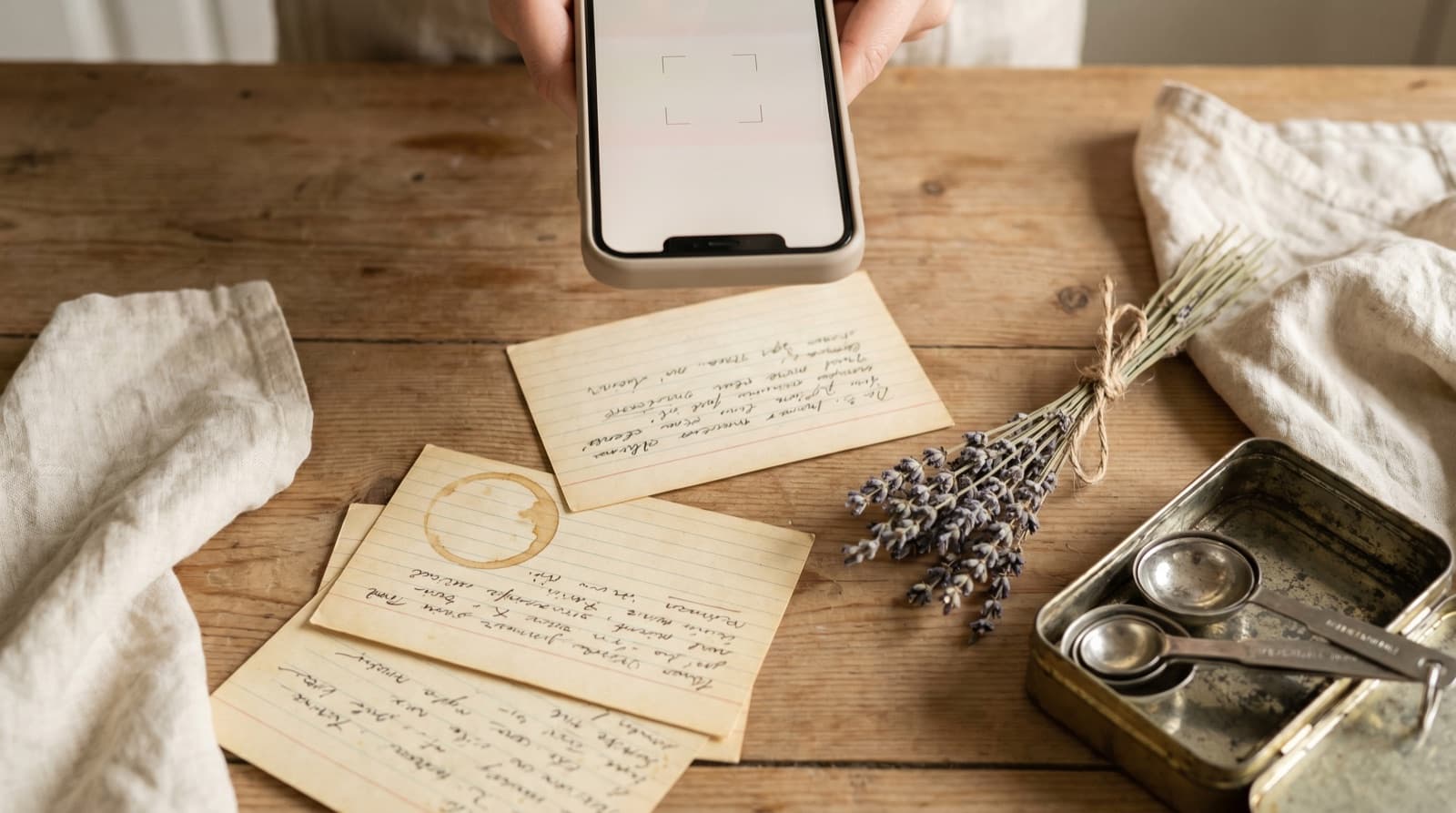
Twitter/X has quietly become one of the best places to find serious recipe content. Chefs, food writers, home cooks, and restaurant professionals post there — not the sanitised, SEO-optimised, ad-supported version of a recipe that lives on a food blog, but the real thing: the technique they actually use, the ratio they arrived at after thirty attempts, the shortcut a professional kitchen never publishes because it’s too obvious to explain to anyone who isn’t already cooking seriously.
The problem is that Twitter was built to move information, not to store it. And when the platform stores something for you — in a bookmark, a liked tweet, a saved thread — it stores a pointer to content on servers controlled by a company whose relationship with its users has been visibly, repeatedly unstable. The recipe isn’t yours. You’re borrowing the bookmark.
Why Twitter Bookmarks Fail for Recipes
Twitter bookmarks were a genuine improvement over the public “like” button for saving content. They’re private, they accumulate without social consequences, and there’s a search function. For most types of content — articles, threads, reference links — they work well enough. For recipes, they fail in several distinct ways.
1. There are no folders, categories, or filters. Bookmarks is one pile. You can search it by keyword, but searching “pasta” returns every bookmarked tweet containing the word — the recipe, the complaint about bad pasta, the piece about Italian trade policy, the meme. There’s no way to ask “show me everything I’ve bookmarked that I could make with what’s in my fridge.”
2. A bookmark is a pointer, not a copy. If the account that posted the recipe is suspended, restricted, or deleted, the tweet disappears and the bookmark leads to an error page. If the person who posted the recipe simply deletes it — regrets the visibility, cleans up old content, gets into a dispute and nukes their account — same result. The bookmark survives; the recipe doesn’t.
3. Twitter threads are not recipes. A 22-tweet thread is a compelling reading experience and a terrible cooking reference. The quantities are scattered across eight tweets; the order of operations is implied rather than listed; there’s no “serves 4” and no cook time unless the writer remembered to include one. To cook from a thread, you have to hold your phone in one hand and scroll between tweets with your other thumb while your onions are burning. It is not a format designed for a kitchen.
4. The platform itself is unreliable custody. Twitter has changed ownership, pricing, API access, and content moderation policies several times in a short window. Accounts that were prominent food-content sources two years ago are suspended, gone, or significantly diminished. Trusting a recipe to a platform this volatile is the same mistake as trusting it to a Facebook group that might be deleted or a Telegram channel that might go quiet.
5. No shopping list. No scaling. No pantry integration. Even if you bookmark a recipe thread and find it again, it doesn’t know how many people you’re cooking for, it can’t be halved, and it can’t cross-reference against what you already have in the fridge. The thread is the beginning of the process, not the end. You still have to do all the work a recipe-keeper app does automatically.
How to Save Recipes from Twitter/X Properly
If the recipe is in a thread
Open the thread and read through it to the end — some threads bury a critical step in tweet 19 of 22, and you want to know the full recipe before you start copying. Then go back to the beginning and copy the recipe content tweet by tweet. Paste everything into a single block in Pantree’s import screen. The app reads the ingredients and method out of the unstructured text and builds a structured recipe: quantities, steps, an editable title. What went in as a wall of tweets comes out as something you can actually cook from.
If the thread links to a recipe page
Many food writers tweet a summary thread and link to the full recipe on their site. In this case, tap the link to open it in your browser, then share the page to Pantree via the share sheet. The app strips out the ads, the autoplay video, and the 1,200-word preamble and gives you the recipe. We covered why recipe websites themselves are a problem in an earlier post — the Twitter thread is often a cleaner version of the same content, but the website recipe is more complete and better structured for cooking.
If it’s a single recipe tweet (no thread)
Some recipes arrive as a single tweet: a ratio, a technique, a one-pan method in 280 characters. These are often the most valuable — the distillation of something a good cook knows by heart. Tap and hold the tweet to copy the text, then paste it into Pantree. Add context in the notes field: the account name, what the dish is actually called, the size of batch the quantities produce. A recipe that arrived as a tweet and got saved as a vague three-line import is still better than a bookmark to a tweet that no longer exists.
If you already have a pile of bookmarks
Go through your bookmarks systematically — not all at once, but five per session. For each recipe bookmark: open the tweet, copy the content or the link, import it into Pantree, and delete the bookmark once it’s saved. A recipe that lives in two places (the bookmark and your keeper) is a recipe you still don’t fully own. The bookmark is a liability; the imported recipe is an asset.
This is the same clearing-out process we recommend for Pinterest boards, Reddit saves, and Notes app dumps: a one-time investment of focused attention that converts a pile of pointers into a library you can actually use.
What You Gain When the Recipe Is Yours
The practical advantages of extracting a Twitter recipe into a proper keeper are the same regardless of where the recipe came from.
- You can search by ingredient. “What can I make with lamb, preserved lemons, and chickpeas?” is a question Pantree answers across your whole library. Twitter bookmarks answer it with every tweet you saved that mentions any of those words.
- You can scale it. The tagine that the thread writer made for eight can be halved for a dinner party of four, or quartered for a weeknight for two, without doing the arithmetic yourself.
- The recipe can’t be taken away. Account suspensions, deleted tweets, platform shutdowns, policy changes: none of these affect a recipe in your keeper. You imported it; it belongs to you now.
- It lives with the rest of your recipes. The same import works for TikTok, Instagram, recipe websites, email newsletters, and photographed cookbook pages. The chef’s Twitter thread ends up next to the Ottolenghi recipe from your newsletter, searchable together.
- A shopping list generates itself. Pick the recipes for the week, and Pantree deduplicates the ingredients against your pantry and produces one list. No going back to the thread to check quantities. No wondering if you already have cumin.
The Volatility Argument
A detail worth naming directly: Twitter has become one of the more volatile places to store anything you care about. This isn’t a political point — it’s an observation about link rot and digital custody. Studies on web content persistence consistently find that roughly 25% of links that existed five years ago are now broken — and social media links break faster than most, because the content is user-generated and user-deletable. A recipe you found in 2022 and bookmarked in 2023 has a meaningful chance of being inaccessible by 2027.
The solution isn’t to stop using Twitter as a discovery tool — it remains an excellent one. It’s to treat the platform as a source rather than a library. You discover the recipe on Twitter; you keep it somewhere that doesn’t depend on Twitter staying exactly as it is. The same logic applies to every social platform, which is why recipe fragmentation is a structural problem rather than a platform-specific one. We covered the bigger picture in how to stop wasting food: the waste isn’t just food going in the bin, it’s also cooking effort going unbought because the recipe was in a place you couldn’t rely on.
A Note on Thread Readers
Thread reader apps unroll a tweet thread into a single readable page, which is genuinely useful for long-form reading. For recipes, they’re a partial solution: better than 22 tweets in sequence, still not a structured recipe. The content is on someone else’s server, there’s no ingredient search, you can’t scale the quantities, and the shopping list still doesn’t exist. Thread readers are a reading tool; they’re not a substitute for importing the recipe into something built for cooking.
If a thread reader helps you read a recipe more easily before you copy it — fine. Use it. Then import the recipe into Pantree and delete the thread reader bookmark. One home, not two.
The Point
Twitter/X is genuinely one of the best places to find serious, tested, opinionated recipe content from people who cook for a living or cook obsessively as a hobby. The format rewards specificity and punishes padding, which is why a well-written recipe thread is often clearer than a blog post three times its length.
None of that value survives in a bookmark. The bookmark is a permission slip to access someone else’s content on a platform you don’t control. The imported recipe is yours — to cook from, to annotate, to scale, to build a shopping list around, and to own even if the account that posted it no longer exists.
Three minutes to copy a thread and paste it into a recipe keeper is a better investment than a bookmark you’ll search for in six months and probably won’t find.
Frequently Asked Questions
How do I save a recipe from a Twitter/X thread?
Open the thread, copy the recipe text from the tweets, then paste it into a recipe-keeper app like Pantree. The app reads the ingredients and steps out of the block of text and structures them into a searchable, scalable recipe. If the thread contains a link to a full recipe page, tap the link, open it in your browser, and share it to Pantree via the iOS share sheet or Android share menu. Either way, you end up with a recipe you own — not a bookmark to a thread that could vanish.
Why do Twitter bookmarks fail for recipes?
Twitter bookmarks are a single, unsorted pile. There are no folders, no ingredient search, no way to filter by cuisine or cook time. You can search bookmarks by keyword, but searching 'chicken' returns every tweet you bookmarked that mentions chicken — a news story, a meme, the recipe. More fundamentally, a bookmarked tweet is a pointer to content you don't control: if the account is suspended, the tweet is deleted, or Twitter changes its policies, the bookmark leads nowhere. The recipe was never yours to keep.
What happens to Twitter recipes when an account is suspended or deleted?
They disappear. A suspended or deleted account takes all its tweets with it, and any bookmarks pointing to those tweets become dead links. This is not a hypothetical: high-profile food accounts have been suspended, renamed, or simply gone quiet and deleted. The only way to own a recipe you found on Twitter is to extract the text and save it somewhere you control — a recipe-keeper app, a notes document, anything that isn't contingent on the account still existing.
Can I use a thread reader to save Twitter recipes?
Thread reader apps (like Readwise Reader or Threadreader) unroll a tweet thread into a single readable page, which is better than reading 22 numbered tweets in sequence. But a thread reader still stores the content on their servers, not yours, and it still gives you a wall of text rather than a structured recipe. You can't search by ingredient, you can't scale the quantities, and you can't generate a shopping list. It's a better reading experience, not a recipe library.
Are Twitter recipe threads accurate enough to cook from?
Generally yes, with caveats. Twitter's character limit was raised but threads still encourage brevity, so quantities are sometimes vague ('a good handful', 'season generously') and steps can be compressed. The best threads from food writers and chefs are tested and precise; viral threads from casual accounts are occasionally missing a step. Treat a Twitter recipe like a recipe card from a friend: cook it, make notes, and adjust your saved version. Pantree lets you annotate imported recipes, so you can record what you changed.
Is saving a recipe from Twitter legal?
A list of ingredients has no copyright protection anywhere in the world — ingredient lists cannot be owned. The method text has a lower bar for originality than most creative works, but as a practical matter: saving a private copy of a recipe you intend to cook is universally accepted as personal use. What isn't acceptable is republishing someone's method verbatim on a commercial site without credit. Keep it to your own recipe library, cook from it, and you're fine.
Get the recipe out of the thread.
Copy a Twitter thread or paste a recipe link into Pantree and get a clean, scalable recipe with a shopping list — no bookmarks, no scrolling, no hoping the account still exists next year. Free on the App Store.