How to Save Recipes from Bluesky (Before the Feed Buries Them)
Bluesky’s food community is genuinely good — food writers, chefs, and home cooks posting tested recipes in threads that scroll away in hours. Here’s how to keep them.

Bluesky launched in 2023 as a decentralised alternative to Twitter/X and has since built a quietly impressive food community. Food journalists, recipe developers, restaurant chefs, and serious home cooks who left Twitter during its ownership transition ended up on Bluesky, and brought their recipes with them. The quality of food content there is high — more tested recipes and fewer promotional posts than you would find on Instagram or TikTok.
The problem is the same one that affects every social platform: the feed is designed to surface new content, not to store useful things you have already found. A brilliant pasta recipe a food writer posted on Tuesday afternoon is buried under forty other posts by Thursday. The like button saves it to a list, but that list is a flat, unsearchable pile — the same Instagram bookmark problem in a different app.
Why Bluesky Recipes Are Harder to Keep Than Most
Recipes live in threads, not posts
The most Bluesky-native recipe format is the thread: a method posted across three to eight chained posts, each containing a step or a section of ingredients. This is a natural fit for the platform, where the character limit encourages breaking long content into sequences. But threads are harder to recover than single posts. When you scroll past a recipe thread, finding it again requires remembering the creator’s handle, guessing when they posted it, and scrolling their profile until you spot it. Bluesky has no native bookmark-to-folder system, and searching within a specific account’s posts is limited.
The feed moves faster than you expect
Bluesky’s chronological default feed and its algorithmic Discovery feed both prioritise recency. A post that was at the top of your feed an hour ago can be fifty posts down by the time you come back from a meeting. Unlike Instagram, where the algorithm resurfaces popular posts over several days, Bluesky’s pace is closer to Twitter’s original chronological timeline: fast, and unforgiving if you miss the window.
The AT Protocol does not guarantee permanence
Bluesky is built on the AT Protocol, a decentralised standard that stores posts on Personal Data Servers rather than a single central database. This is architecturally interesting and gives users more control over their data. It does not, however, mean posts are permanent. If a creator deletes a post, it disappears from Bluesky’s app and most third-party clients, even if a copy technically lingers on some data server somewhere you cannot access. If an account is deleted, the posts are effectively gone. The food writer whose tagliatelle recipe you saved in your liked-posts feed last March: if they delete the post, your “save” now leads to nothing.
How to Save Bluesky Recipes
Method 1: Copy the thread text and paste into Pantree
For recipe threads — the most common format for original recipes on Bluesky — this is the most reliable method. Open the thread, read through to the end so you have the full method and ingredient list, then copy the text from each post in sequence and paste the combined text into Pantree’s text import. The app parses the ingredients and steps into a structured recipe.
On desktop, select all the text in the first post, copy, add the subsequent posts in order, and paste the whole thing into Pantree. On mobile, long-press to select text, copy, and switch to Pantree. A five-post recipe thread takes about ninety seconds to process. The result is a structured recipe with a searchable ingredient list, a method, and a shopping list — not a chain of social media posts you have to read in sequence.
Method 2: Copy the link for posts that point to recipe websites
Many Bluesky food posts are teasers for a full recipe on a blog, newsletter, or website. Tap the three-dot menu on the post, copy the link in the post body, and paste it into Pantree’s URL import. The app fetches the recipe page and extracts the structured content — the same way it handles any recipe website. This is faster than copying thread text and produces a cleaner import when the linked page is a well-formatted recipe site.
Method 3: Screenshot image recipes and import via camera
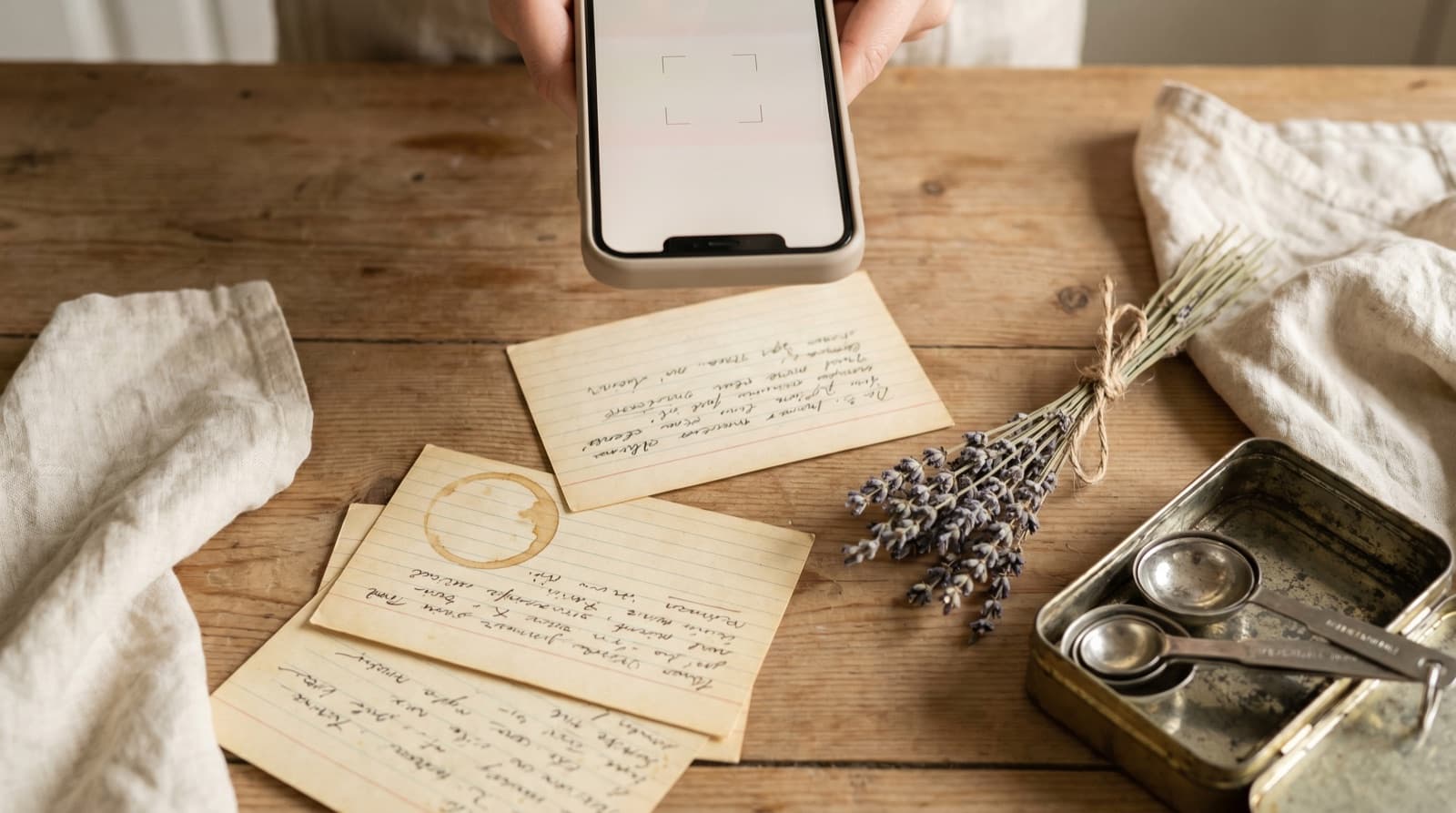
Some creators post recipes as image cards — a nicely formatted graphic with the ingredient list and method laid out as text. These are common from recipe developers who want a shareable visual format. Screenshot the image and import it into Pantree via the camera function. The app reads the text in the image and extracts the recipe. The quality of the import depends on the legibility of the font in the image; most recipe cards use clean, readable typography that imports well.
The Case for Saving Bluesky Recipes Immediately
The window between seeing a good Bluesky recipe and losing it is shorter than on most platforms. Instagram resurfaces saved posts. TikTok’s bookmark feed is searchable within the app. Bluesky’s liked-posts list is neither. If you see something worth cooking on Bluesky, the practical choice is to save it to Pantree in the moment, rather than trusting the liked-posts pile to surface it when you need it.
This is the same habit as Twitter/X required — the platforms are similar enough in pace that the same rule applies: save when you see it, or assume you will not find it again. The food content on Bluesky is good enough to make that habit worth building.
What You Can Do With a Saved Bluesky Recipe
Once a recipe thread is in Pantree, it behaves like any other recipe in your library, regardless of where it came from.
- Search by ingredient. When you have half a bag of lentils and want to know if you have a recipe for them, Pantree searches your whole library — including that lentil soup from the food writer whose thread you saved in February.
- Scale it. A recipe posted in a thread is usually scaled for whatever the creator made for dinner. If that is two and you need six, Pantree adjusts every quantity automatically.
- Shop from it. A shopping list built from the recipe gives you every ingredient and quantity, sorted for a real supermarket run — not a list of posts to squint at in the supermarket aisle.
- Cook from it in step mode. Pantree’s step-by-step cook mode ticks off ingredients as you use them and walks you through the method one step at a time — significantly more useful than switching between posts in a thread while your hands are covered in dough.
- Keep it permanently. Whether the creator deletes the thread next month or leaves the platform next year, your saved recipe in Pantree is unaffected. It is yours now, not a reference to a post that might not exist.
Building a Routine That Actually Works
The habit that works across all social platforms is the same: when you encounter a recipe you want to cook, save it to Pantree in that moment rather than leaving it to the platform’s bookmark system. Bluesky’s food community rewards this habit more than most, because the feed turnover is fast and the content quality is worth keeping.
Think of your Pantree library as the place where good recipes from everywhere — TikTok, Reddit, cooking newsletters, meal kit cards, and now Bluesky — end up in one searchable place. The individual platforms come and go; the library is yours.
Frequently Asked Questions
Does Bluesky have a native way to save posts or recipes?
Bluesky has a basic 'like' button that saves posts to your liked-posts feed, and you can create custom feeds that surface content by keyword. Neither is a recipe library: liked posts are a flat, unsearchable list, and keyword feeds are for discovery, not storage. There is no structured bookmark system, no folder hierarchy, no way to tag a saved post as a recipe with searchable ingredients. The only way to have a recipe you found on Bluesky as a searchable, scalable recipe is to move it out of the platform entirely.
Are recipes posted to Bluesky as text, images, or links?
All three, depending on the creator. Food writers and chefs often post recipes as threaded text — a method across several posts chained together. Food photographers post the dish image with ingredients in the alt text or caption. Bloggers and newsletter writers post a teaser caption with a link to the full recipe on their site. Text-thread recipes are the most Bluesky-native format and also the hardest to recover once they scroll away, because threading is less discoverable than a standalone post. Image recipes depend on whether the creator put the method in the caption. Link posts are the easiest to save — copy the URL directly into Pantree.
What happens to Bluesky posts if an account goes private, changes handle, or deletes posts?
Bluesky's decentralised architecture (the AT Protocol) means posts are technically stored on a Personal Data Server rather than Bluesky's own servers, and in principle your copy of a post exists as long as the original PDS is running. In practice, if an account deletes a post, it disappears from Bluesky's own app and most third-party clients, even if the data technically persists somewhere. If a creator leaves the platform or changes handle, threads become harder to find. If the account is deleted, the posts are effectively gone from normal access. Saving a recipe out of Bluesky when you see it is the only guarantee you keep it.
Can I save a Bluesky recipe thread as a single recipe rather than a chain of posts?
Yes, and that is exactly the point. A recipe spread across a five-post thread is inconvenient to read, impossible to search by ingredient, and awkward to scale. When you copy the text from a thread and paste it into Pantree's text import, the app parses the ingredients and method into a structured recipe — one document with a clear ingredient list, numbered steps, and a shopping list. What arrived as a chain of social media posts becomes a recipe you can actually cook from.
Is it legal or ethical to save a Bluesky recipe for personal use?
Saving a recipe for your own cooking is exactly what recipes are for. Recipe ideas and cooking techniques are not copyrightable; specific written expression technically is, but saving something to a personal recipe library for your own use is no different from copying a recipe from a magazine into a notebook — something cooks have done for as long as magazines have existed. What is not fine is reposting someone's recipe as your own work, putting it on a public website, or selling it. Save it, cook it, credit the creator if you share it with friends.
How do I find good food accounts to follow on Bluesky?
Bluesky's Starter Packs are the fastest entry point: curated lists of accounts around a topic, which you follow in one tap. Search 'food', 'cooking', or 'recipes' in the Starter Pack directory. The Discovery feed surfaces trending posts across the network, and searching hashtags like #recipe or #cooking finds recent posts. Many food writers who left Twitter/X in 2023–2024 moved their community to Bluesky, so if you followed food journalists, recipe developers, or chefs on Twitter, there is a good chance they are active on Bluesky under the same name.
Stop losing recipes to the Bluesky feed.
Paste a thread or a link into Pantree and get a searchable, scalable recipe with a shopping list — permanently yours, independent of any platform. Free on the App Store.