How to Meal Prep for the Week (A Beginner’s Guide)
Meal prep sounds like something fitness influencers do with eight identical containers of chicken and broccoli. It doesn’t have to be. Here’s a realistic, beginner-friendly system for planning, shopping, and cooking a week of meals, without spending your entire Sunday in the kitchen.
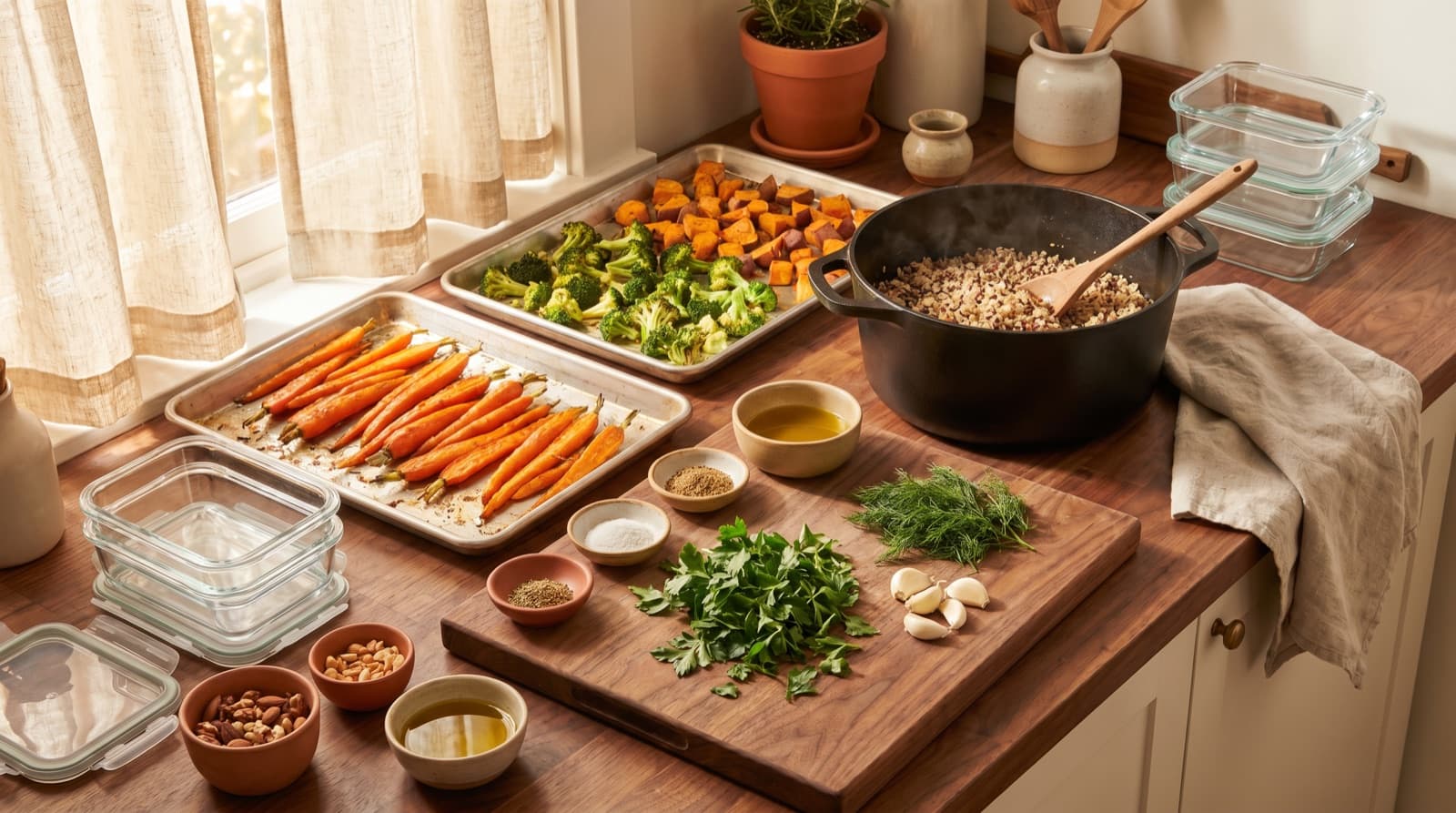
The idea behind meal prep is simple: do the thinking and cooking work once, eat well all week. But most beginners either try to do too much (21 identical Tupperware containers of sadness) or too little (a vague plan that falls apart by Tuesday). The sweet spot is somewhere in the middle, and once you find it, it genuinely changes how you eat.
People who meal prep consistently report spending less money on food, eating more nutritiously during the week, and wasting significantly less. Done right, meal prep is also one of the most effective ways to reduce food waste at home , because you’re buying exactly what you need and using all of it.
Here’s the whole system, from zero to a full week of meals.
Step 1: Decide What You Actually Need to Prep
Before you open a single recipe, figure out which meals you actually need. Most people default to prepping dinner every night, but dinner is often the easiest meal to cook fresh. The highest-impact targets are usually lunches (when you’re most likely to order takeout or buy something overpriced near the office) and breakfast (when time is tightest).
Ask yourself:
- Which days will I definitely not have time to cook?
- Which meal am I most likely to buy expensively when tired?
- Are there nights I always end up ordering food anyway?
A realistic beginner target: prep 3–4 dinners and 3–4 lunches. Leave 2–3 nights loose for leftovers, eating out, or flexible cooking. Trying to prep every meal for seven days is a reliable path to burnout and a fridge full of containers you eventually throw out.
Step 2: Choose Your Recipes (and Choose Wisely)
Recipe selection is where most beginners go wrong. They pick five completely different meals with completely different ingredients, end up buying 40 separate items, and spend four hours in the kitchen.
The golden rule of meal prep recipes: shared ingredients. Pick recipes that overlap, the same protein used in two different ways, the same grain as a base for two different dishes, the same roasted veg that works in a salad and in a wrap.
A practical beginner week might look like:
- One grain base, a big batch of rice or quinoa that goes into multiple meals
- One protein, two ways, roasted chicken thighs used in both a weeknight salad and a weekday wrap
- One soup or stew, perfect for lunches, freezes beautifully, feeds you for 3–4 days
- A sheet-pan vegetable roast, use as a side for multiple dinners or fold into the grain bowls
With this approach, you’re cooking four things but eating eight or nine different combinations. That is the real lever in meal prep.
If you use Pantree, you can save recipes directly from food blogs, TikTok, and Instagram, then browse your saved collection to plan the week. The app highlights which recipes share ingredients, making it easy to spot the most efficient combinations.
Step 3: Build a Smart Shopping List
Once you have your recipes, consolidate the ingredients into a single shopping list, grouped by section (produce, proteins, pantry, dairy). Do not use the individual recipe ingredient lists directly; aggregate them first.
Before you write a single item, do a quick fridge-and-pantry audit. Check what you already have. This is the step most people skip, and it is the step that saves the most money. You almost certainly have some onions, some cooking oil, some tinned tomatoes. Don’t buy them again.
Once your list is written, check it against your meal plan one more time:
- Does every item on the list have a purpose in a specific meal?
- Are there any items that appear in only one recipe and will leave you with a lot of leftovers?
- Can you substitute something you already have instead of buying a new ingredient?
If you use Pantree, it builds the consolidated shopping list automatically from your saved recipes, aggregating quantities, removing duplicates, and letting you check off items as you shop.
Step 4: Schedule Your Prep Session
Most people do their main prep on Sunday. This is fine, but it is not the only option. Some people prefer Saturday afternoon (so Sunday is genuinely restful), some split prep across two shorter sessions (Sunday and Wednesday), some do a quick 20-minute weeknight prep to top up what’s running low.
The best prep day is the one you will actually stick to. Block it in your calendar like an appointment, not a vague intention.
For a beginner session prepping 3–4 dinners and lunches, allow 90 minutes to 2.5 hours. This includes grocery unpacking, chopping, cooking, and packing. With practice and better recipe selection, you can get this to 60–90 minutes.
Step 5: Run an Efficient Prep Session
The difference between a chaotic prep session and an efficient one is sequencing, doing things in the right order so nothing sits waiting and nothing burns while you’re doing something else.
Before you start
- Clear and wipe down your countertops
- Set out all your containers (washed and dry)
- Read through all your recipes once before you touch anything
- Group your ingredients by recipe so you’re not hunting through bags mid-cook
The right order to cook
- Start the longest-cooking things first. Grains (rice, quinoa) take 20–35 minutes. Soups and stews take 30–60 minutes. Get these on the heat before you do anything else.
- Prep while things are cooking. While the rice is simmering, chop the vegetables for the sheet pan. While the soup is building, prep the protein for roasting.
- Use the oven for multiple things at once. A sheet-pan of vegetables and a tray of chicken thighs can roast at the same temperature simultaneously.
- Let everything cool before packing. Packing hot food into containers creates condensation, which speeds spoilage. Give everything 10–15 minutes to cool on the counter.
Quick wins for common prep tasks
- Onions and garlic: prep the total quantity you need for all recipes at once. Chopping onions once is much better than four times.
- Leafy greens: wash and dry a whole bag at the start of the week; store with a paper towel to absorb moisture. They’ll last 5–6 days this way.
- Hard-boiled eggs: cook a batch (8–10 eggs) in one go. They keep unpeeled in the fridge for a week and are the fastest protein addition to any meal.
- Cooked grains: make double the amount you need for this week. Freeze half in individual portions for emergency dinners next week.
Step 6: Store Everything Properly
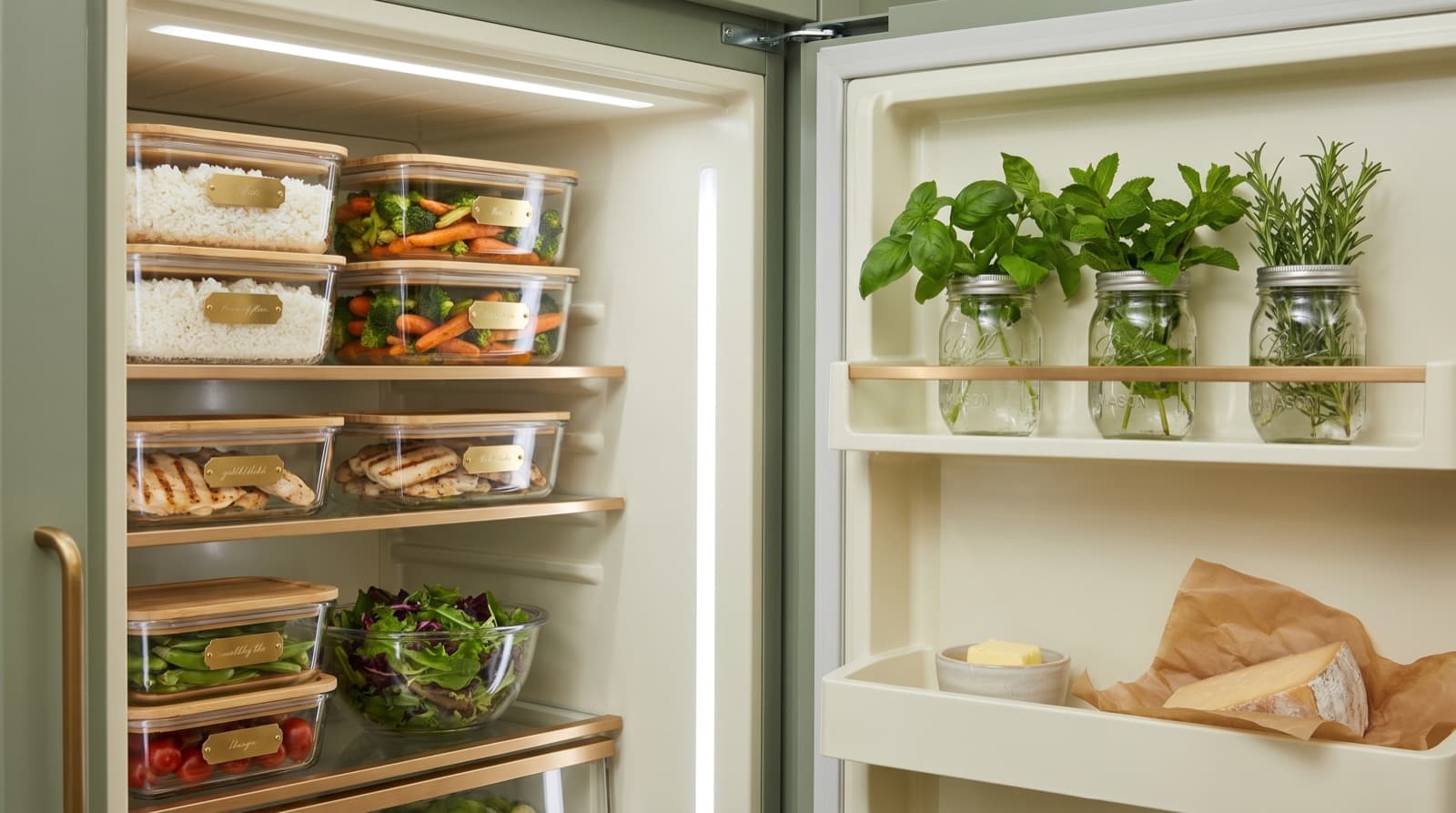
Most cooked meals keep well in the fridge for 4–5 days. Prep on Sunday covers you comfortably through Thursday or Friday.
For anything you want to keep longer, freeze it. Most cooked meals , soups, stews, grain dishes, cooked proteins, freeze well for 2–3 months. Freeze in individual or two-person portions so you can thaw exactly what you need.
Label every container with the dish name and date. This sounds fussy until you open a freezer with six unlabelled containers and cannot tell the difference between lentil soup and chicken stew.
Foods that do not prep well:
- Dressed salads, the dressing wilts the leaves within hours. Store dressing separately and toss immediately before eating.
- Pasta dishes, the pasta continues to absorb sauce and becomes mushy by day 2. If you want pasta in your prep, store sauce and pasta separately.
- Fried foods, they go soft and soggy. Do not prep these ahead.
- Avocado, browns quickly even with lemon juice. Add fresh when serving.
A Sample Beginner Meal Prep Week
To make this concrete, here is a simple, overlapping recipe plan that uses a short shopping list:
- Batch 1: Roast chicken thighs (8 thighs, 45 min in the oven), used in grain bowls (Mon, Wed) and wraps (Tue lunch)
- Batch 2: Big pot of lentil soup, lunches for Tue, Wed, Thu. Freezes two extra portions.
- Batch 3: Roasted vegetables (courgette, capsicum, red onion), served with chicken Mon/Wed, folded into pasta Thu
- Batch 4: Cooked quinoa (triple batch), base for grain bowls Mon/Wed, leftover quinoa salad Fri lunch
Shopping list for the above: chicken thighs, red lentils, tinned tomatoes, vegetable stock, courgette, capsicum, red onion, quinoa, canned chickpeas, lemon, garlic, olive oil, cumin, paprika. Roughly 14 items, most of which you probably have partially already.
The Mindset Shift That Makes Meal Prep Stick
The biggest mistake beginners make is treating meal prep as a performance, they go all-in for one week, it takes four hours, and they never do it again. The goal is not a perfect week. The goal is a slightly better week.
Even prepping just lunches, three containers of a grain bowl or soup , saves money, reduces decision fatigue, and keeps you from buying bad food when you’re rushed and hungry. That is a win. Build from there.
The other mindset shift: meal prep is not about eating the same thing every day. It’s about having components ready, a cooked protein, a grain, a vegetable, that you assemble differently each day. Same ingredients, different combinations. That is how you avoid food fatigue.
And if “what do I make with what I have” is ever the question, Pantree’s AI Chef is built for exactly that, tell it what’s in your pantry and fridge, and it’ll suggest what to cook. No scrolling. No decision fatigue.
Frequently Asked Questions
How long does meal prep take for a beginner?
For a beginner prepping 3–4 dinners plus lunches, expect 1.5 to 2.5 hours including chopping, cooking, and packing. With practice and better recipe selection (fewer dishes, shared ingredients), most people get this down to 60–90 minutes. The first session always takes longer.
How many meals should I meal prep at once?
Start with 3–4 dinners and 3–4 lunches for the week. Do not try to prep 21 meals at once, this leads to food fatigue, spoilage, and burnout. Leave 2–3 nights flexible for leftovers, eating out, or ordering in. A partial week of prep is more sustainable than an overambitious full week.
What foods are best for meal prep?
The best meal prep foods are those that hold well in the fridge for 4–5 days: cooked grains (rice, quinoa, farro), roasted vegetables, legumes (chickpeas, lentils, black beans), cooked proteins (chicken breast, hard-boiled eggs, baked tofu), and soups or stews. Foods to avoid prepping ahead: dressed salads, anything fried, most pasta dishes (the pasta absorbs sauce and goes mushy).
How far in advance can I meal prep?
Most cooked meals keep well in the fridge for 4–5 days. Prep on Sunday covers you through Thursday comfortably. For longer storage, freeze individual portions, most cooked meals freeze well for 2–3 months. Label containers with the date so you know what to use first.
What containers are best for meal prep?
Glass containers with airtight lids are the gold standard, they do not stain, are microwave-safe, and last for years. Good budget alternatives are BPA-free plastic containers or zip-lock bags for freezer portions. Standard meal prep portions fit well in 2-cup (500ml) containers for lunches and 3–4-cup (750ml–1L) containers for dinners.
Make meal prep easier with Pantree
Save recipes, build shopping lists, and get AI-powered meal ideas based on what you already have. Free on the App Store.