A Grocery List That Sorts Itself by Aisle
Most shopping lists are written in the order you thought of things, which is the one order guaranteed to send you back and forth across the shop. Group the same list by store section and a weekly shop becomes a single clean loop — faster, calmer, and with far fewer “I knew I forgot something” moments.
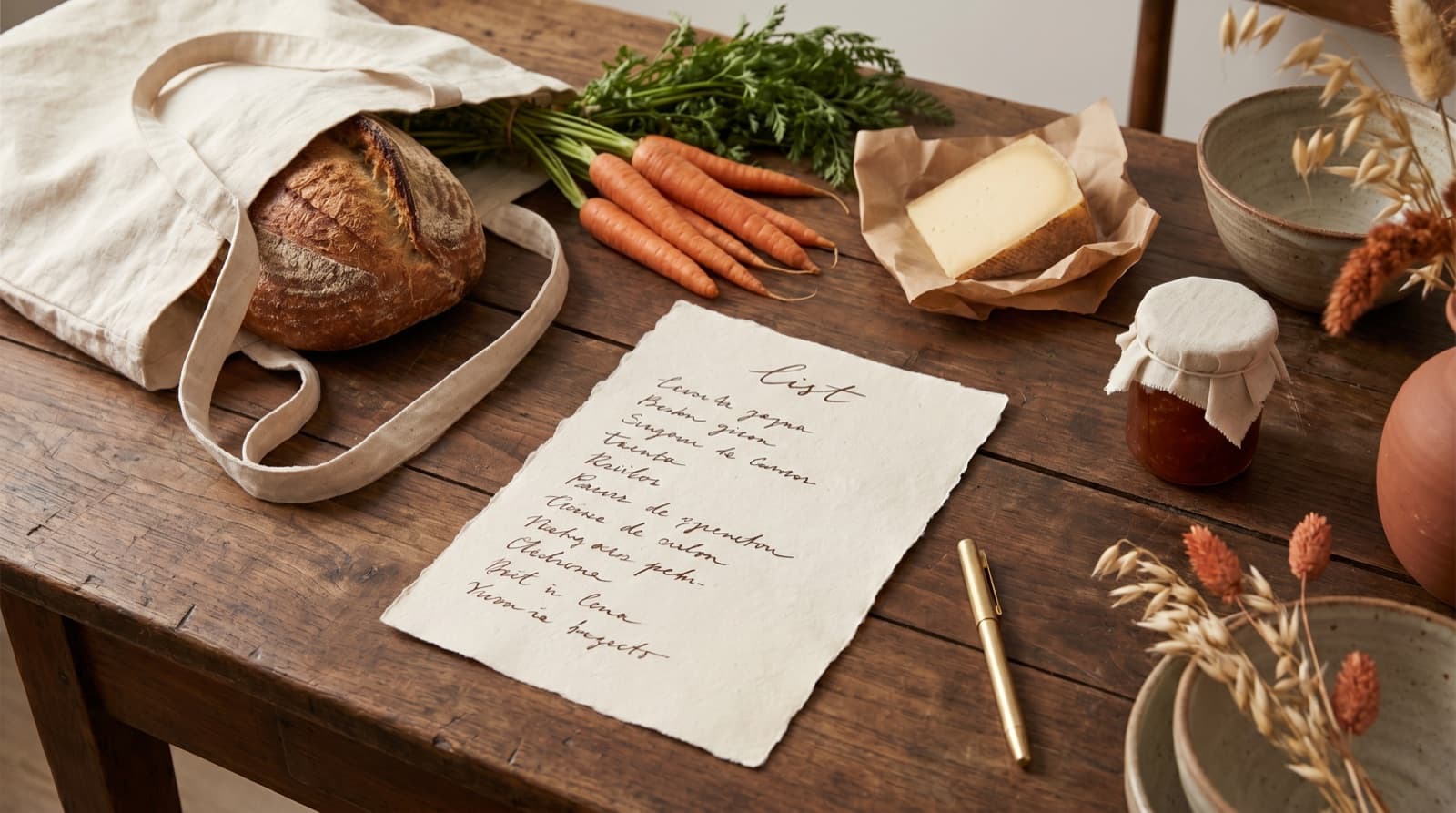
There’s a specific small misery to supermarket shopping with a badly ordered list. You’re in the tinned aisle, you tick off chopped tomatoes, you walk on — and three lines later the list says kidney beans, which were on the shelf you just left. So you double back. Then a forgotten line sends you back to produce. By the time you reach the till you’ve walked the shop one and a half times and picked up two things you didn’t plan to buy.
None of that is a discipline problem. It’s a sorting problem. The list was written in the order ideas arrived — which is the order recipes list their ingredients, which has nothing to do with where those ingredients live in the shop.
Why Aisle Order Beats Recipe Order
A list grouped by store section lets you clear each zone completely before moving on. You enter, do produce, never return to produce. The walk becomes a single loop instead of a zig-zag. On a normal weekly shop that’s a quarter of an hour back, and it compounds: less time in the shop means fewer minutes spent drifting past the things supermarkets put at eye level precisely to catch a wandering eye.
That last part matters more than it sounds. Backtracking and aimless laps are exactly when unplanned purchases happen. A list that moves you through the shop with purpose is quietly a budgeting tool as well as a time-saver.
The Store Layout Is More Predictable Than You Think
You don’t need a map of your specific supermarket to sort a list usefully, because nearly all of them follow the same logic. Fresh produce sits by the entrance because it looks abundant and sets a “fresh” tone. The ambient, long-life staples — tins, pasta, rice, baking — fill the dry middle aisles. The chilled and frozen goods hug the perimeter and the back, near the refrigeration plant. Meat and fish are usually at the rear.
So a perimeter-and-middle order works almost everywhere. If you do most of your shopping in one store, spend a single trip noting the real section order, then lock that in. From then on every list comes out matching your actual route.
A Category Order That Works
Use these headers, roughly in this sequence, and adjust the middle to your shop:
- Produce — fruit, veg, fresh herbs, salad.
- Bakery — bread, wraps, baked goods.
- Tinned & jarred — tomatoes, beans, stock, sauces.
- Dry goods — pasta, rice, grains, cereal, flour.
- Baking & condiments — oils, spices, sugar, vinegar.
- Snacks & drinks — the impulse corridor; in and out.
- Dairy & eggs — milk, cheese, yoghurt, butter.
- Meat & fish — fresh and chilled proteins.
- Frozen — always last, so it thaws least before checkout.
- Household & non-food — cleaning, toiletries, pet.
Within each header the order doesn’t matter — the entire win is in the grouping. You’re no longer reading a list and translating it into a route on the fly; the list is the route.
The Part Most People Skip: Build It From the Recipes
Sorting by aisle fixes the shop. But the list itself is usually born broken — cobbled together from a recipe screenshot, a half-remembered dinner plan, and a couple of things texted between flatmates. That fragmentation is where forgotten items come from, and it’s the same problem that makes saved TikTok recipes and screenshotted Instagram recipes so hard to actually cook.
The real upgrade is to generate the list straight from the recipes you’ve chosen for the week. Done properly, three things happen at once:
- Every ingredient is captured — no reliance on remembering you needed garlic.
- Duplicates merge — three recipes calling for onions become one line at the right total, instead of three half-buys.
- What you own is subtracted — the half-bag of rice and the nearly-full soy sauce never make the list, so you stop buying things you already have.
Then you sort the remainder by aisle. That’s a finished, store-ordered list with zero transcription — the difference between “sit down and copy out five recipes” and “tap the recipes, get the list.”
How Pantree Does It
This is most of why we built Pantree. You save recipes from wherever they live — a link, a screenshot, a photo of a handwritten card — pick what you’re cooking this week, and the app assembles one shopping list: ingredients combined, pantry stock subtracted, and the whole thing sorted by aisle so it follows your route through the shop. You spend the saved twenty minutes cooking instead of crossing the supermarket twice.
If meal planning is the part that trips you up, the what-to-cook framework pairs well with this — decide the meals, and the sorted list falls out the other side.
The Point
A grocery list is a route through a building, not a memory dump. Write it in the order you walk the shop — produce to frozen, perimeter and middle — and you stop doubling back, forget less, and buy fewer things you didn’t plan to. Build it from your recipes rather than from memory and the list stops being a chore you do badly at the last minute, and starts being something that’s just ready when you are.
Frequently Asked Questions
How do I organise a grocery list by aisle?
Group items by the order you physically walk the store, not by recipe. A reliable default order: produce first (it's usually by the entrance), then bakery, then the dry-goods and tinned aisles in the middle, then chilled dairy and eggs, then meat and fish at the back, then frozen last so it spends the least time thawing in your trolley. Within each group, list items in any order — the win is in the grouping, not the sequence inside it. Write the headers once and slot items underneath as you plan the week.
Why is a grocery list by aisle faster?
Because an unsorted list forces you to walk the same aisle two or three times. You grab pasta, move on, then four lines later the list says 'tinned tomatoes' — which were back where you just were. A list grouped by store section turns shopping into one clean loop: you clear each zone completely before moving to the next. For a typical weekly shop that's 15–20 minutes saved and far less doubling back, which is also where most impulse buys happen.
Does the aisle order need to match my specific store?
Roughly, yes — but most supermarkets follow the same broad layout because it's built around food safety and footfall: fresh produce by the door to look abundant, staples in the dry middle, chilled and frozen around the perimeter and back. A generic perimeter-then-middle order works in 90% of shops. If you do most of your shopping in one store, spend one trip noting the actual section order and lock that in; a good list app lets you reorder categories to match.
How do I stop forgetting items on my grocery list?
Forgotten items almost always come from a list that's scattered across places — one thing in Notes, another texted to your partner, a recipe screenshot you meant to check. Consolidate to a single list, and build it the moment you plan meals rather than from memory at the door. The biggest single fix is generating the list straight from the recipes you intend to cook, so every ingredient is captured automatically and nothing relies on you remembering you needed garlic.
Can a grocery list build itself from recipes?
Yes — this is the real time-saver. Instead of reading five recipes and hand-copying ingredients into a list, an app like Pantree reads the recipes you've chosen for the week, combines duplicate ingredients (so three recipes calling for onions become one line), subtracts what you already have in your pantry, and sorts the remainder by aisle. You go from 'what do I need to buy?' to a finished, store-ordered list in seconds, with no transcription and no double-buying.
What's the best order for grocery list categories?
A dependable template: 1) Produce, 2) Bakery, 3) Tinned & jarred goods, 4) Dry goods & pasta/rice, 5) Baking & condiments, 6) Snacks, 7) Drinks, 8) Dairy & eggs, 9) Meat & fish, 10) Frozen, 11) Household & non-food. Frozen goes last so it stays cold the shortest possible time before checkout. Adjust the middle aisles to your store, but keep produce near the start and frozen at the end.
Let your shopping list sort itself.
Pantree turns the recipes you’re cooking into one aisle-sorted list — duplicates merged, pantry subtracted. Free on the App Store.