How to Save Money on Groceries (Without Being Miserable)
11 realistic ways to cut your grocery bill, without coupon albums, joyless meal plans, or pretending lentils are a personality. Most households can save $1,500+ a year just by buying smarter.
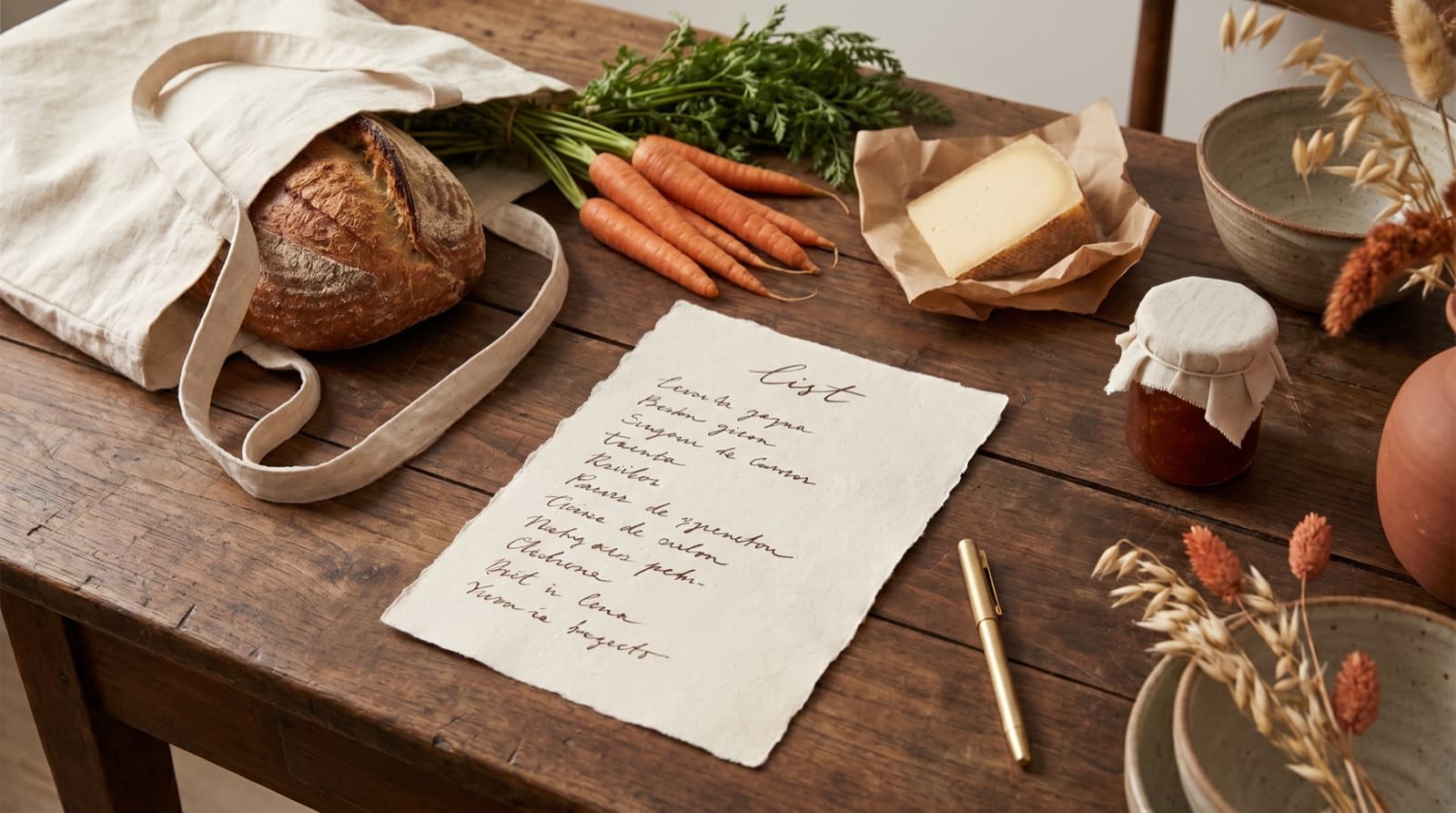
Most advice on saving money on groceries falls into one of two camps: the extreme couponer with a binder, or the influencer who tells you to eat oats for every meal because they cost 12 cents. Neither is a real plan for an actual household. Real households want to spend less on food without giving up the food they like.
The good news: that’s entirely possible, and most of the saving comes from a small number of habits, not from your willingness to suffer. The average family wastes $1,500–2,000 of food a year through over-buying and forgotten ingredients, money you can recover without changing your menu at all. Here are 11 things that actually move the number.
1. Audit before you shop (the highest-leverage habit)
Before you write the list, look at what’s already in the fridge, freezer, and pantry. This single habit, done in five minutes, prevents the duplicate-buying that quietly bloats most grocery bills. You walk in thinking you need yoghurt; the tub at the back of the fridge says you don’t.
For the deeper version of why this matters and how to make it stick, our post on how to stop wasting food walks through the audit habit in detail.
2. Plan meals around what you have
Don’t find a recipe and buy everything for it, look at what’s in your kitchen and plan around that. The chicken thighs in the fridge plus the rice in the pantry plus the sad half-cabbage is dinner. The pasta plus tinned tomatoes plus garlic is dinner. Most weeknight meals are 3–6 ingredients you already have.
Our framework on what to cook with what you have shows you how to read your kitchen the way a cook does, protein + carb + vegetable + something acidic or salty.
3. Write a specific shopping list (and stick to it)
Going to the supermarket without a list is how impulse buys hit you. A specific list, tied to specific meals you’re cooking this week, gives you a reason to say no to everything else. “Some chicken” isn’t a list item; “500g chicken thighs for Wednesday’s sheet-pan dinner” is.
4. Switch staples to store brand
On dry goods, pasta, rice, flour, sugar, oats, tinned beans, tinned tomatoes, the store brand is almost always indistinguishable from the branded version, often made in the same factory. Switching saves 15–20% on a typical shop with no quality loss. For sauces, dairy, and a handful of premium categories the difference can be real, try once, decide once.
5. Buy in bulk only when it makes sense
Bulk savings are real for things that don’t go off: rice, pasta, oats, dried beans, lentils, oils, tinned goods, frozen items. They’re fake for fresh produce or anything with a short shelf life, you save 20% per unit, throw away 30%, and net out a loss. The only test that matters: how much of this will I actually use in the next 30 days?
6. Anchor more meals around cheap, high-impact ingredients
Eggs, dried beans, lentils, frozen vegetables, in-season fresh produce, whole chickens (cheaper per kilo than parts), tinned fish, oats, and bulk grains. A lentil and tomato soup with bread costs roughly a third of an equivalent ready meal and is genuinely better for you. You don’t need to make every meal from these, just shift the balance a few times a week.
Want to know which 25 are worth the shelf space? Our 25 pantry staples list is the starting point.

7. Use the freezer like an extra cupboard
Bread (slice it first, toast from frozen), cooked rice (portioned in containers, microwave from frozen), leftover sauce (frozen in ice-cube trays), bananas going brown (peeled and bagged for smoothies or banana bread). The freezer turns “I have to use this today” into “I have this whenever I want” , which is the difference between using and wasting.
8. Cook one extra portion, on purpose
When you’re already cooking, doubling the recipe takes almost no extra time but produces tomorrow’s lunch or another night’s dinner. The hidden cost of takeaway and ready meals isn’t just the per-meal price, it’s the fact that you’re defaulting to them when there’s already cooked food at home. Cooking one extra portion intercepts the next takeaway.
9. Shop in-season produce
In-season produce is cheaper, tastes better, and travels less. Strawberries in winter cost 4x more than in summer and have a quarter of the flavour. Asparagus in October is a tax on impatience. The supermarket sells you whatever, but a quick seasonal check (almost any farm site has one) usually points to two or three vegetables a month that are properly cheap.
10. Designate a “use it up” meal each week
One night a week, no recipe, cook from whatever needs going. Stir-fries, frittatas, fried rice, sheet-pan dinners, and “fridge pasta” absorb almost any combination of ingredients. This single habit is the difference between buying chicken stock for a recipe and using up the half-bag of vegetables you forgot you had.
11. Track inventory the way you track money
Nobody runs a household budget without knowing what’s in the account, but most of us run a kitchen budget with no idea what’s in the pantry. The cost of that information gap shows up on the next receipt. A simple inventory, a sticky note, a shared list, or an app, closes the gap.
We built Pantree specifically for this: log what’s in your pantry and fridge with quantities and expiry dates, get matched recipes for what you have, and stop buying the third tin of chickpeas. Free on the App Store.
The realistic outcome
You don’t need to do all 11. Pick the three that are cheapest in willpower for you, maybe the audit, the store-brand swap, and one “use it up” meal a week. Most households see their grocery bill drop 15–20% in a month, just from those three. Add a fourth and a fifth as the habits stick. Compounding works in supermarkets too.
Frequently Asked Questions
How much can I realistically save on groceries?
Most households can cut their grocery bill by 20–30% within two months without changing what they actually like to eat. The average family wastes $1,500–2,000 of food per year through forgotten ingredients and over-buying, that money is recoverable through inventory awareness and a tighter list, not by switching to a beans-only diet.
What's the single biggest waste in most grocery budgets?
Duplicate buying. People buy ingredients they already have because they can't see what's in the back of the pantry or the bottom of the fridge drawer. The second biggest is ingredients bought for one specific recipe that gets cooked once, the rest of the bottle, jar, or bunch goes off. Both problems are solved by an inventory you can actually check.
Should I switch to store-brand for everything?
For staple dry goods (pasta, rice, flour, sugar, tinned beans, tinned tomatoes) the store brand is usually identical or near-identical to the branded version, often made in the same factory. For sauces, cheeses, dairy, and chocolate the difference can be real, try once and decide. The store brand savings on a typical grocery shop can be 15–20% with no quality loss on staples.
Is meal prepping actually cheaper?
Yes, but only if you use the meals. The savings come from buying ingredients in larger quantities at lower per-unit prices and from cooking them before they expire. If a third of your meal prep ends up uneaten, you're back to square one. Start with prepping just one component (a batch of grains, a roasted tray of vegetables, or a protein) rather than five full meals.
What foods give the best 'cost per meal' ratio?
Dried beans and lentils, eggs, frozen vegetables, in-season fresh produce, whole chickens (cheaper per kilo than parts), tinned fish, oats, and bulk grains. A meal of lentil soup with bread costs about a third of the equivalent ready meal and is genuinely better for you. None of this requires you to abandon meals you actually enjoy, it just means anchoring more dinners around these ingredients.
Are grocery delivery apps cheaper or more expensive?
Usually slightly more expensive (delivery fees, service fees, surge pricing on busy windows), but they can save you money in two specific ways: you avoid impulse buys at the checkout (which the average shopper makes 3–5 of), and you can compare per-unit prices more easily on the app than in a busy aisle. If you're disciplined in-store, shop in-store. If you tend to throw things in the trolley, the app's restraint pays for itself.
Do I really save by buying in bulk?
Only on things you'll actually finish before they go off. Bulk dry goods (rice, oats, pasta, dried beans), tinned goods, oils, and frozen items: yes. Bulk fresh produce, dairy, or specialty items: usually no, the bigger pack just goes off and the per-unit saving disappears with the wasted half. The rule is: how much of this will I genuinely use in the next 30 days?
Stop buying what you already have.
Pantree tracks your kitchen so you don’t buy a third tub of yoghurt. Free on the App Store.