How Long Does Bread Last? (On the Counter, in the Fridge, and Frozen)
Bread is one of the most-wasted foods in the kitchen — roughly a fifth of every loaf bought ends up binned. Half of that is storing it wrong, and the other half is throwing away stale bread that could’ve been toast. Here’s how long bread really lasts, why the fridge is the wrong answer, and what to do with the heel of the loaf.
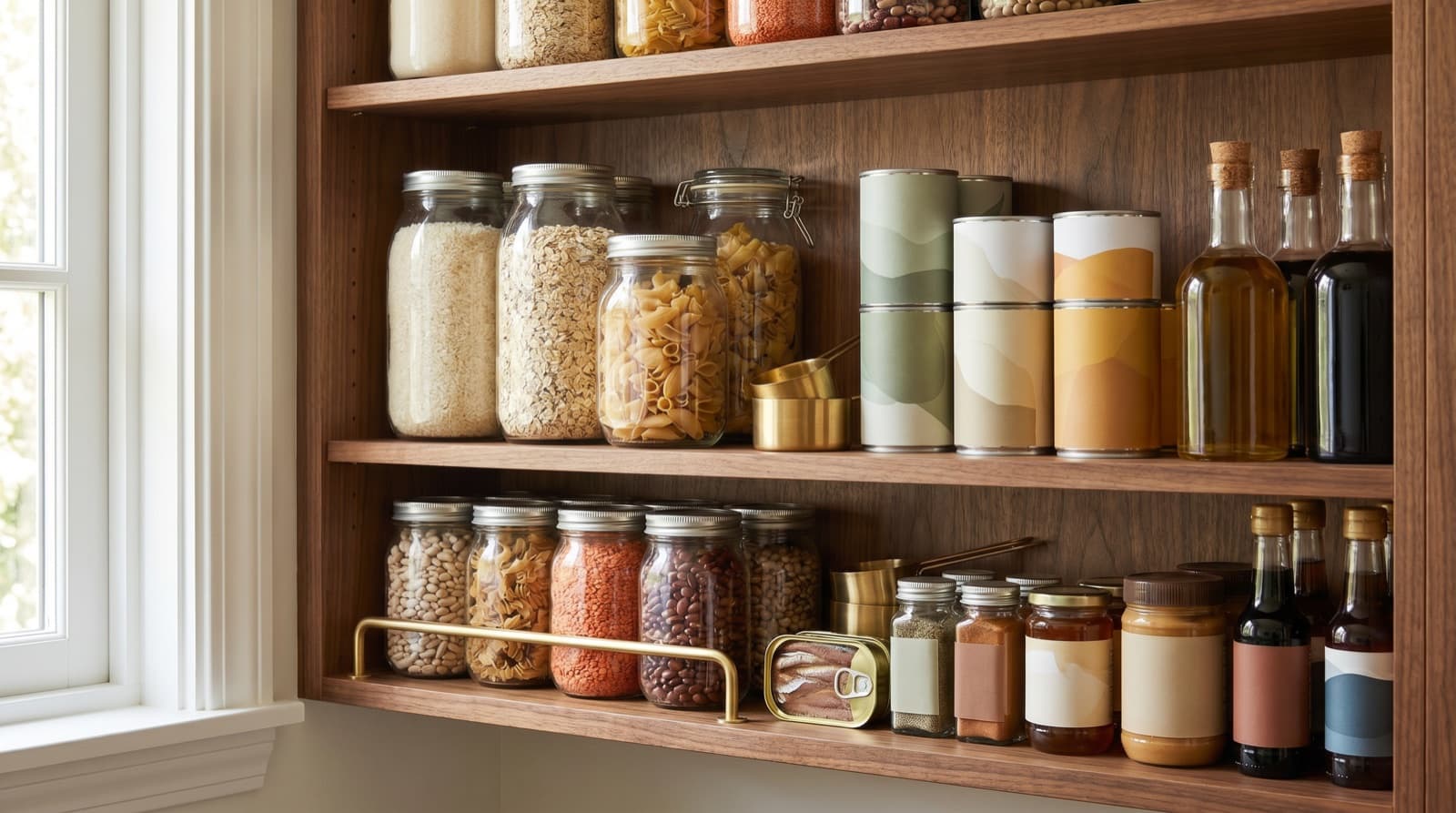
Bread sits in an awkward spot. It feels cheap, so binning the last few slices doesn’t register as waste the way tipping out milk might — but it adds up. In the UK, WRAP has long found bread to be one of the most-wasted foods in the home, with the equivalent of millions of slices thrown away every day. Most of it is avoidable, and it comes down to two mix-ups: storing bread the way that ages it fastest, and confusing stale with spoiled.
How Long Bread Lasts, by Type and Place
The big variable is preservatives. A standard supermarket sliced loaf is formulated to last a week; a bakery loaf made from flour, water, salt and yeast has nothing holding mould and staling back, so it’s a few-day proposition. Numbers below assume a cool, dry kitchen.
At room temperature
- Shop sliced bread (with preservatives) — 5–7 days in its bag.
- Artisan / bakery loaf (no preservatives) — 2–4 days.
- Sourdough — 4–5 days; the acidity slows mould.
- Soft rolls, bagels, baps — 3–5 days, or freeze.
- Flatbreads, tortillas, pitta — up to a week sealed; check the pack date.
In the freezer
- Any bread, well wrapped — ~3 months at good quality (safe well beyond, texture slips).
In the fridge
- Don’t — it stales bread faster than the counter. More on why below.
Why the Fridge Is the Wrong Place for Bread
It feels intuitive: cold slows things down, so the fridge should keep bread fresh. With bread, the opposite is true. Bread goes stale through starch retrogradation — after baking, the gelatinised starch in the crumb slowly recrystallises, squeezing out moisture and leaving the bread dry and firm. That recrystallisation runs fastest at fridge temperatures, around 4°C. So a loaf in the fridge turns dry and tough noticeably quicker than the same loaf left on the counter.
The fridge does slow surface mould, which is the only reason you’d consider it — say, in a very hot, humid kitchen where a loaf moulds in two days. But for almost everyone, the better split is simple: counter for the next few days, freezer for the rest. The freezer all but stops both staling and mould, and frozen bread comes back beautifully.
The Freezer Is the Real Answer
Freezing is the single most effective thing you can do with bread, and it’s underused. The rules are easy:
- Freeze it fresh. The day you buy it, not the day it starts to turn — freezing pauses bread where it is, it doesn’t reverse staling.
- Slice first. Pre-sliced means you take two slices for toast without thawing the whole loaf.
- Wrap well. Original bag inside a freezer bag, or foil, with the air squeezed out, to keep ice and odours off.
- Use it from frozen. Toast slices straight from the freezer; thaw a whole loaf on the counter for a couple of hours and warm a crusty one in the oven to revive the crust.
Done this way, a loaf you’d otherwise have half-binned becomes three months of toast and sandwiches on demand.
Stale vs Spoiled — They’re Not the Same
This is where most of the avoidable waste happens. Stale bread is dry, hard and crumbly — but perfectly safe, and arguably better than fresh for a whole category of cooking. Spoiled bread has mould or an off smell, and that’s a bin job.
Stale bread is the raw material for some of the best cheap cooking there is: toast, of course, but also croutons, breadcrumbs (blitz and freeze them), French toast, bread-and- butter pudding, panzanella, ribollita, and the classic Tuscan pappa al pomodoro. Treat the heel of a loaf as an ingredient, not a write-off, and the “it went stale” half of bread waste mostly disappears.
Mould: Bin the Whole Loaf
One hard rule, because it’s the one people get wrong: if bread has mould, throw out the entire loaf, not just the slice with the fuzzy patch. Bread is soft and porous, so what you can see on the surface is only the fruiting body of the mould — a network of invisible threads, and in some cases the toxins certain moulds produce, will already have spread through far more of the loaf. That’s different from a hard cheese or a firm vegetable, where cutting a generous margin around the mould is fine. With bread, it isn’t. Don’t sniff it up close either — there’s no need to inhale the spores. When in doubt, chuck it out.
The Habit That Saves the Loaf
Most bread waste, like most food waste, is a memory problem. The loaf gets pushed behind the cereal, you buy another before the first is finished, and the heel quietly goes hard or grows a spot. The fix is the same one that solves every shelf-life question: a system that knows what you’ve got, how long it’s been there, and nudges you to use it — or freeze it — before it’s too late.
That’s part of why we built Pantree. It tracks what’s in your kitchen and how long it’s been there, and when a loaf is getting on it points you at what to do with it — toast, croutons, a freezer bag — so it becomes dinner instead of the bin.
For the bigger picture, see how to stop wasting food and our full shelf-life reference for 30+ foods. For the rest of the series, see how long eggs last, milk, leftovers, and cooked rice.
The Point
Shop sliced bread lasts about a week on the counter, a bakery loaf two to four days, and neither belongs in the fridge, which only stales them faster. Freeze what you can’t finish while it’s still fresh and you’ve got three months of toast on tap. Keep stale and spoiled straight in your head — dry bread is an ingredient, mouldy bread is a bin job for the whole loaf — and you’ll stop throwing away a fifth of every loaf you buy.
Frequently Asked Questions
How long does bread last on the counter?
Shop-bought sliced bread with preservatives keeps 5–7 days at room temperature in its bag. A bakery or artisan loaf with no preservatives — sourdough, a crusty white, ciabatta — is best within 2–4 days, because there's nothing in it slowing the mould or the staling. Keep bread somewhere cool and dry in its original bag or a bread bin; don't leave it in direct sun or above the oven, where warmth speeds spoilage. The clock starts when the loaf is baked, so a supermarket loaf bought near its sell-by date has less counter life than the date alone suggests.
Should you keep bread in the fridge?
No — the fridge is the worst place for bread. It feels like it should help, but refrigeration actually speeds up staling. Bread goes stale through a process called starch retrogradation, where the starch molecules recrystallise and push moisture out of the crumb, and that process runs fastest at fridge temperatures (around 4°C). A loaf in the fridge goes dry and tough noticeably quicker than the same loaf left on the counter. The fridge does slow mould, so if your kitchen is very hot and humid it's a trade-off — but for most people, counter for the next few days and freezer for the rest beats the fridge every time.
Can you freeze bread, and how long does it last frozen?
Yes — freezing is the single best way to make bread last, and it keeps for about 3 months at good quality (longer is safe but the texture slips). Freeze it the day you buy it, while it's at its freshest, rather than freezing a loaf that's already on the turn. Slice it first if it isn't already, so you can pull out one or two slices at a time, and wrap it well — the original bag inside a freezer bag, or foil — to keep ice crystals and freezer odours out. Frozen slices toast straight from the freezer; a whole loaf thaws on the counter in a couple of hours, and a quick warm in the oven brings a crusty loaf right back.
Is it safe to eat bread if one slice has mould?
No — if you see mould on bread, bin the whole loaf, not just the fuzzy slice. Bread is soft and porous, so the mould you can see is only the fruiting body; an invisible network of threads (and the toxins some moulds produce) will have spread through far more of the loaf than the spot on the surface. This is different from a hard cheese or a firm carrot, where you can cut a wide margin around the mould. With bread, cutting off the visible patch isn't safe. Don't sniff it closely either — inhaling mould spores is best avoided. When in doubt, throw it out.
How can you tell if bread has gone off?
Three signs. Mould is the obvious one — any fuzzy spots of green, white, black or blue mean the loaf is done. A sour, yeasty or 'off' smell beyond the normal bread smell is the second; fresh bread smells faintly sweet and toasty, spoiled bread smells musty. The third is texture: bread that's gone hard, dry and crumbly isn't unsafe, it's just stale — and stale bread is rescuable (toast, croutons, breadcrumbs, French toast, bread-and-butter pudding) where mouldy bread is not. Stale means use it up; mould means bin it.
Does sourdough last longer than normal bread?
A bit, yes. The natural acidity from the sourdough fermentation lowers the pH of the crumb, which makes it a slightly less welcoming home for mould, so a sourdough loaf often holds 4–5 days at room temperature versus 2–4 for a plain artisan loaf with no preservatives. A thick crust helps too, sealing moisture in. Store it cut-side down on a board or in a paper bag for the first day or two to protect the crust, then bag it. As with any preservative-free loaf, freeze whatever you won't eat within a few days.
Stop binning the last few slices.
Pantree tracks what’s in your kitchen and what to use before it turns. Free on the App Store.